
 Buy Crypto
- Markets
 Futures
- Spot
- Copy Trade
- Earn
- More
IOSG: Stablecoin Reshaping Asia Cross-Border Payments? Strategic Landscape and Investment Opportunities Analysis

Original Article Title: "IOSG Weekly Brief | Will Stablecoins Reshape Asia Cross-border Payments? Strategic Landscape and Investment Opportunities Analysis #318"
Original Author: Turbo, IOSG Ventures
TLDR;
1. The stablecoin strategy of cross-border payment companies can be categorized into three types: Stablecoin Receipt (accepting stablecoin settlement), Stablecoin Issuance (applying for a license to issue stablecoin), and through an independent offshore brand to isolate regulatory risks. Currently, only a few companies have products live.
2. Stablecoins have a relatively weak fee or speed advantage in cross-border payments. With the proliferation of local payment channels, the cost of traditional transfers has been significantly reduced. Currently, the fees are mainly concentrated in domestic settlement, which stablecoins cannot bypass. Currency exchange is also inevitable, and stablecoins have not truly addressed these two core pain points.
3. Neobanks are the highest value segment in the stablecoin cross-border payment value chain. The true advantage of stablecoin payments lies in the ecosystem's internal circulation, which can only achieve zero friction when both ends of the transaction settle in stablecoins. Regions with weak banking infrastructure such as Southeast Asia, the Middle East, and Africa are the strongest landing scenarios, and Tether's investment in SQRIL is a clear signal of this.
Myth of Stablecoin Cross-border Payments
The stablecoin strategy of Asian cross-border fintech companies mainly includes three directions:
· Stablecoin Usage: Accepting stablecoin settlement for payments
· Stablecoin Issuance: Applying for a license to issue stablecoins
· Independent Brand: Conducting crypto/stablecoin business through an independent offshore entity to separate regulatory risks from domestic licenses
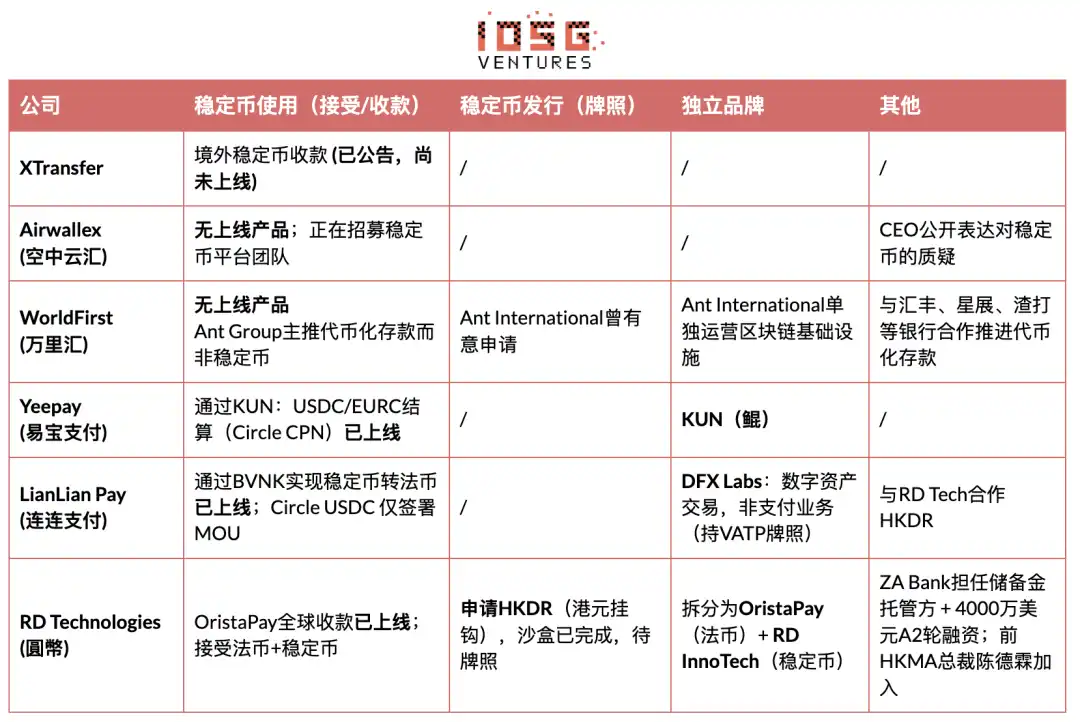
Independent Offshore Entity is a Necessary Condition
All companies with substantial stablecoin businesses operate through independent offshore entities: KUN (owned by Yeepay), DFX Labs (owned by LianLian), RD InnoTech (owned by RD Technologies).
Stablecoin Receipt is currently the only product live, but few companies disclose fees and processing times
Most companies start with Stablecoin Receipt rather than Stablecoin Issuance, including LianLian, KUN, OristaPay. Currently, only RD InnoTech is closest to actually issuing a stablecoin (HKDR).
However, it has not been observed yet that any company, like other mature payment companies, publicly discloses the fees and processing times of stablecoin payment services. The only disclosed fee is by BVNK, with the fee structure being: transfer fee of 0 yuan + standard foreign exchange fee + service fee for in/out external wallets + blockchain fee.
The March 2026 issuance of the Hong Kong license will be an industry turning point
HKMA will issue the first batch of stablecoin issuance licenses in March 2026, with very few companies approved. Currently confirmed companies applying for the license include RD InnoTech, JD, and Anchorpoint Financial. RD InnoTech has a higher probability of approval as it has entered the HKMA stablecoin issuer sandbox.
The license results will determine which companies can upgrade from stablecoin usage to stablecoin issuance and will also determine whether Hong Kong can truly become a stablecoin hub or continue to be restricted by Beijing's influence.
Reasons for the slow implementation of stablecoin by cross-border payment companies
· Stablecoins have almost no fee or speed advantage in cross-border payments
For a cross-border business owner to complete a cross-border payment from overseas to mainland China, it mainly involves three steps: transfer, foreign exchange, and domestic settlement.
Transfer: Funds are moved from overseas buyers to the payment platform through SWIFT, local bank payment channels, or internal wallets.
Foreign Exchange: Converting foreign currency (e.g., USD, EUR) into Chinese Yuan at a specific exchange rate.
Domestic Settlement: Withdrawing the exchanged Chinese Yuan to a mainland China bank account or Alipay.
· New channels like local payment channels have reduced traditional transfer costs to nearly 0% and speeds close to real-time
Traditionally, SWIFT transfer fees are high and time-consuming, being a major source of cross-border payment costs. Among the companies analyzed in this article, transfer fees account for 56% of the total cost. For example, using SWIFT through Airwallex requires a payment of around $25.
However, many cross-border fintech companies already have local payment channels, which means:
Fintech companies receive payments via the payer's local payment network (e.g., ACH in the USA, SEPA in Europe, UPI in India), complete fund transfers within their own global network, then make the payment through the payee's local payment network, completely bypassing SWIFT.
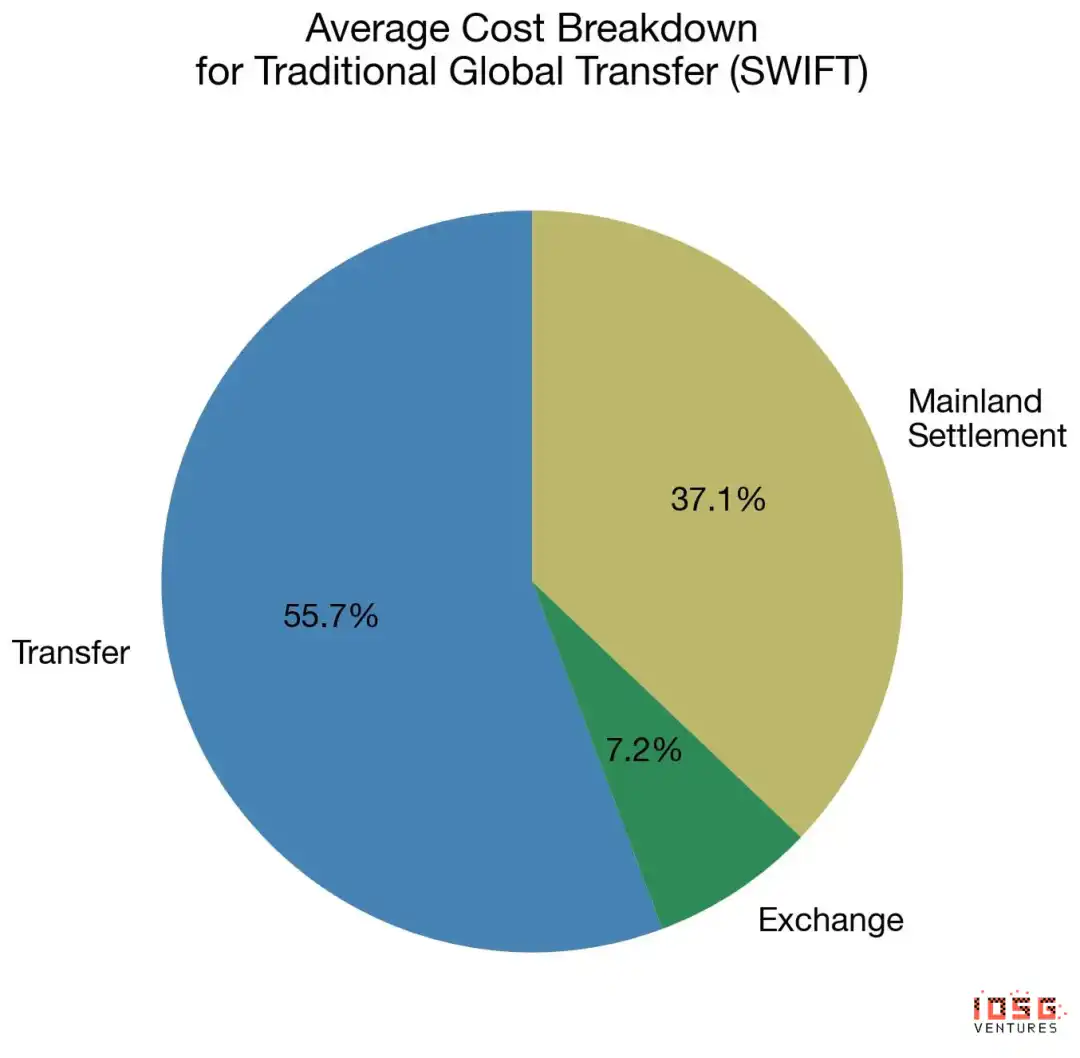
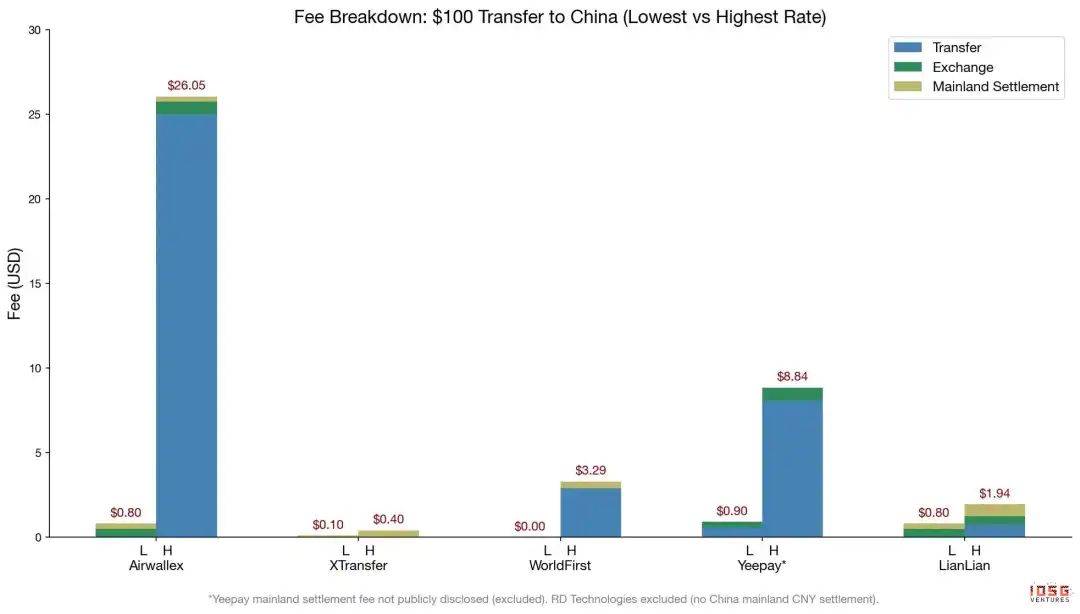
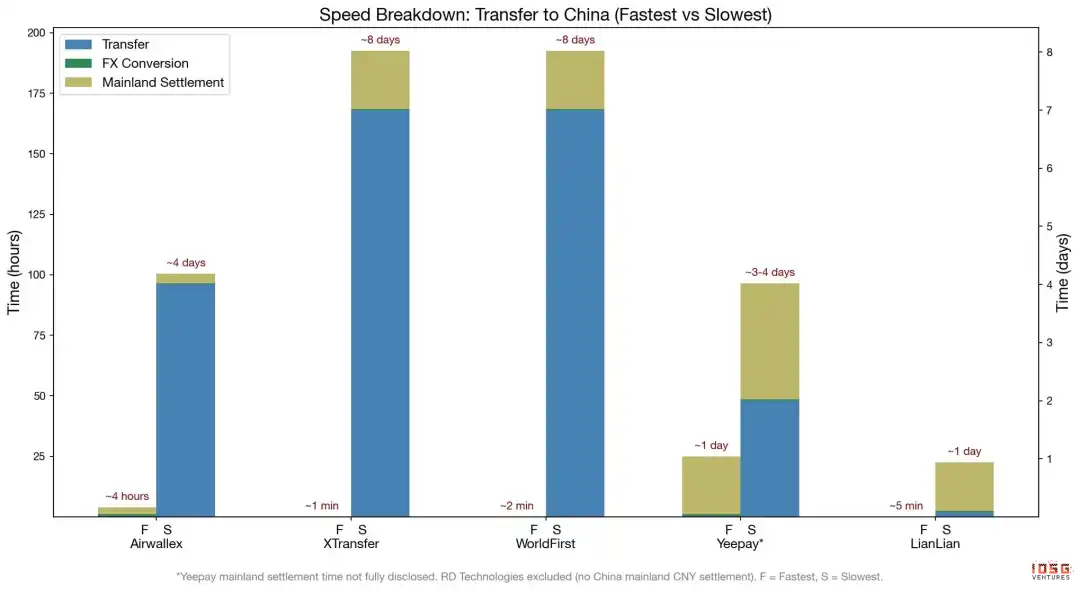
The new channels have significantly reduced cross-border transfer fees. Currently, domestic settlement accounts for 58% of the total cost.
However, domestic settlement is not a step that stablecoins can bypass, as users still need to hold Chinese yuan cash in their bank accounts.
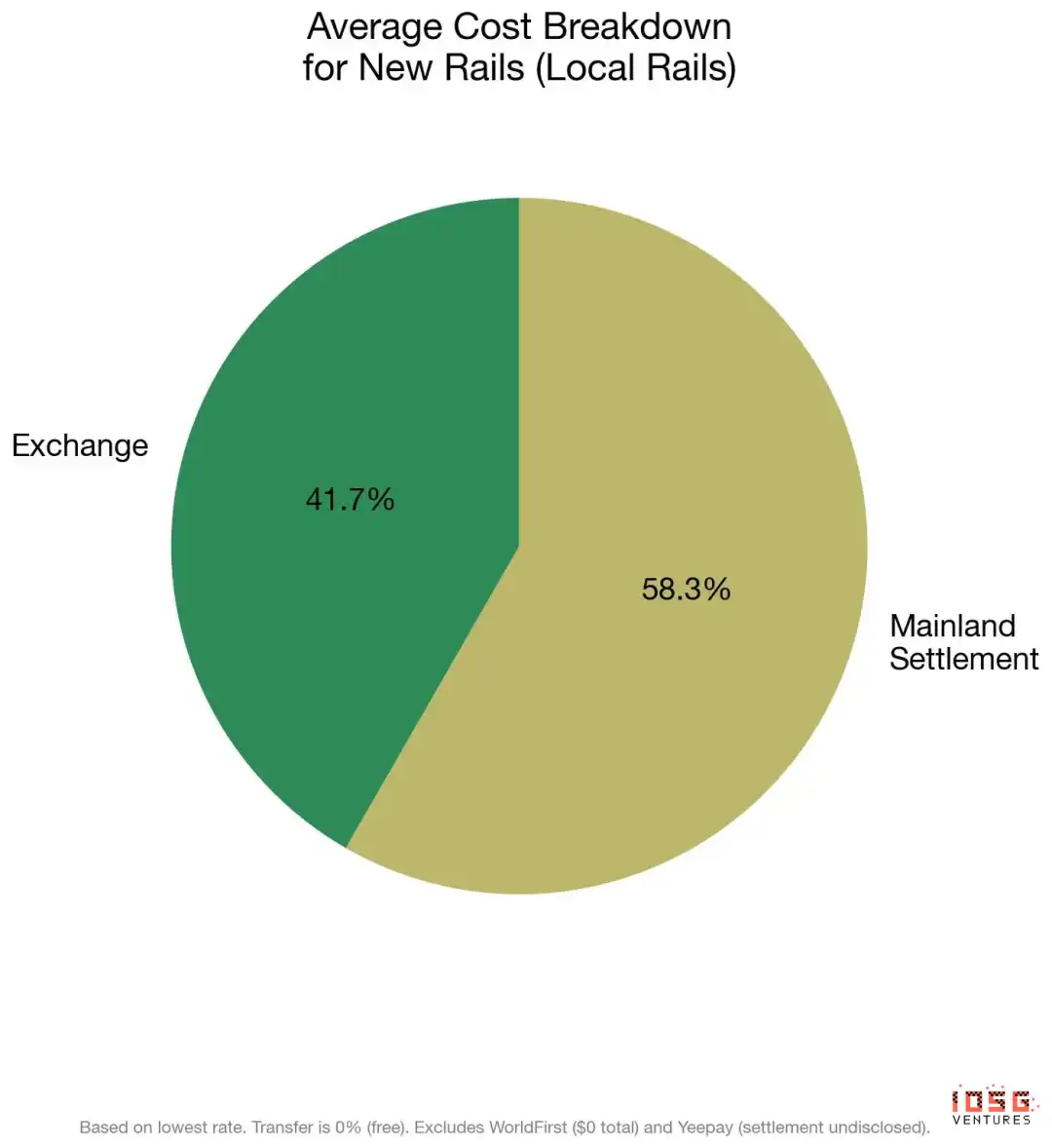
Stablecoins not only cannot bypass domestic settlement, but forex is also an indispensable part of cross-border payments. Stablecoins have little room for improving user experience. Transfers are nearly real-time with almost zero fees; forex is the main cost, and stablecoin companies also need to facilitate forex for users.
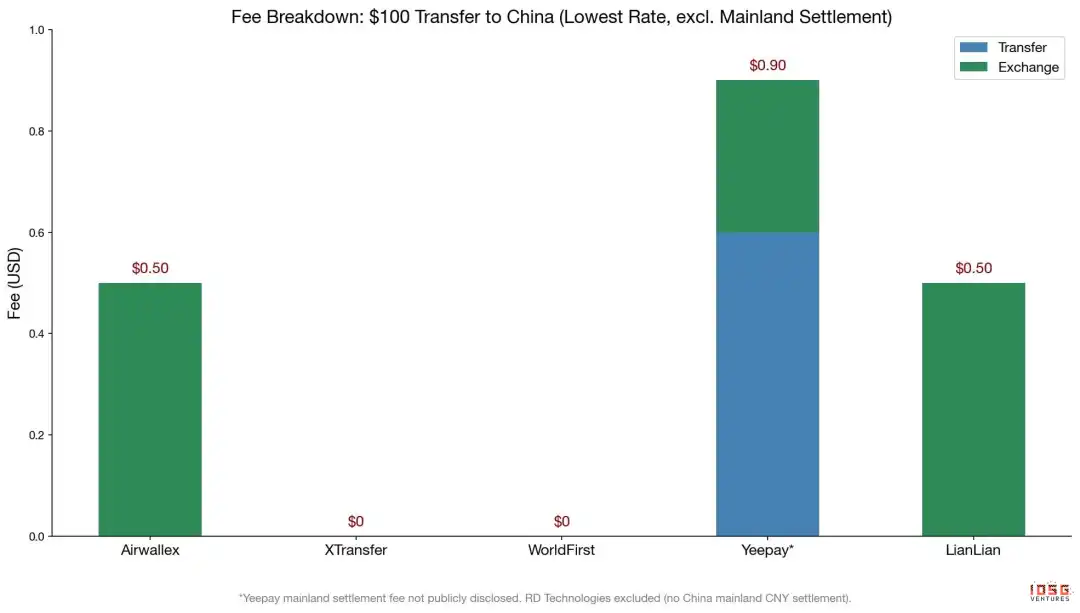
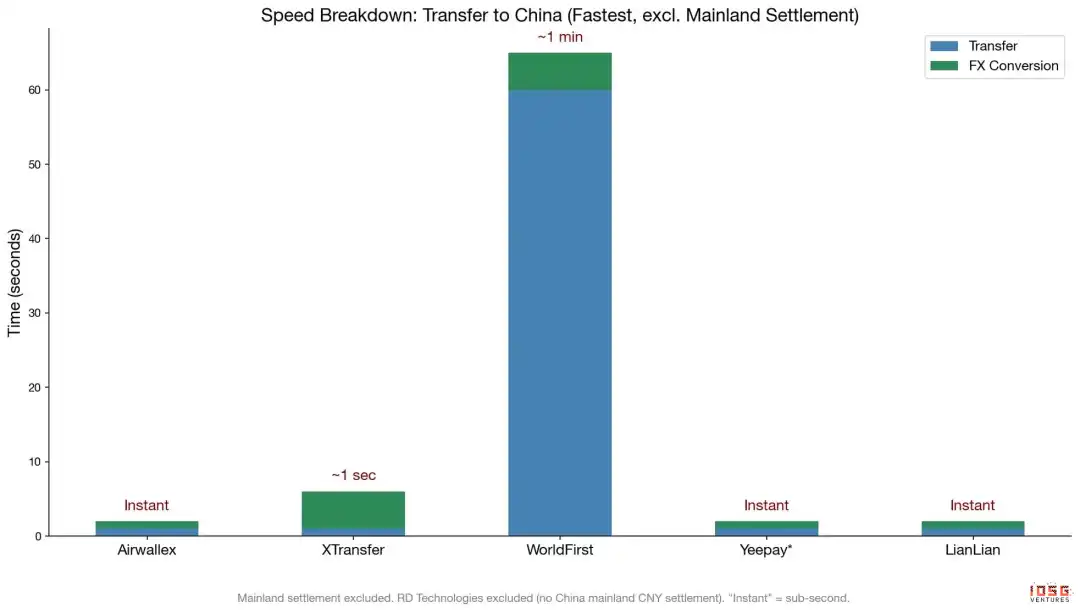
Overall, when fairly comparing cross-border transfer steps (excluding domestic settlement and forex), stablecoins have no room for further improvement.
Investment Insight into the Narrative of Emerging Digital Banks
Core Argument: Emerging Digital Banks are Key to Stablecoin Cross-Border Payments
The value chain of stablecoin cross-border payments is divided into three layers:
1. Issuance Layer (Tether, Circle, HKMA-licensed entities): Creating stablecoins
2. Infrastructure Layer (Bridge/Stripe, BVNK, Circle CPN): Circulation and redemption of stablecoins
3. Distribution/Termination Layer (Emerging Digital Banks): Converting stablecoins into local spending power
Emerging Digital Banks are the core bottleneck in the value chain and the highest value opportunity.
Emerging Digital Banks as the “Last Mile”
Stablecoin cross-border payments only have a true advantage in an ecosystem where the stablecoin itself is the final destination (rather than a fiat bridge).
If a merchant receives payment in stablecoins, pays their suppliers in stablecoins, employees receive their salaries in stablecoins, and spend through a stablecoin-native emerging digital bank, the entire transaction will be completed on-chain, without touching traditional channels.
Once any party needs to convert back to fiat, the cost of off-ramping will reintroduce settlement fees similar to traditional fintech local channels. This is precisely why stablecoin payments are most compelling in regions with weak banking infrastructure, active remittance corridors, or a crypto-native community.
Furthermore, Neobank users can also earn above-market-average yields while holding stablecoins, providing additional incentive for users to choose stablecoin cross-border payments as not only a payment tool but also an interest-bearing asset.
Must Expand into Regions with Weak Financial Infrastructure
The most compelling scenarios for stablecoins are in places where stablecoins are more convenient than traditional banks:
· Southeast Asia (Philippines, Vietnam, Indonesia): Over 44% unbanked population, high penetration
· Middle East/Africa: Large remittance corridors, weak local payment channels, proactive regulatory stance (UAE has established 4 regulatory frameworks)
Tether plays a role in Vietnam's parallel financial system. Tether's investment in SQRIL indicates its growth strategy is betting on the emerging digital bank layer—allowing people in underdeveloped countries to transact USDT locally—which is the strongest market signal.
Why Series A/B Rounds Are the Best Investment Window
Stablecoin emerging digital banks are infrastructure-heavy businesses, requiring local licenses, local bank partnerships, KYC/AML compliance infrastructure, merchant networks, and consumer trust buildup.
· Seed/Pre-A Rounds Too Early: Unvalidated business model, high regulatory risk, unclear unit economics.
· Series A/B Rounds Are the Best Window: Demand validated, compliance confirmed, unit economics validated, significantly reduced investment risk.
· Late/Post-IPO Stage May Be Too Late: Valuation already reflects a premium for a mature business model.
Breakdown of Cross-Border Payment Companies' Stablecoin Strategies
Airwallex
Airwallex is taking a more cautious approach: first focusing on internal development, then planning deployment once regulations and market conditions are favorable. This reflects the company's existing strength in traditional payment channels, reducing the urgency to immediately adopt stablecoins.
Stablecoin/Blockchain Integration: Skeptical Stance with No Live Product Yet
CEO Jack Zhang Skeptical of Stablecoins
· He believes Airwallex has already achieved "real-time transfers at less than 0.01% fee" and states, "You can't get cheaper than free or faster than real-time."
· The company's official blog also presents this stance, indicating that existing local payment channels are already sufficiently efficient.
Internal Stablecoin Team
In July 2025, Airwallex posted 22 stablecoin engineer job positions to establish a token settlement platform team. The job postings disclosed that the company is building infrastructure to enable customers and internal systems to buy, hold, send, and settle tokens globally, supporting near-instant global payments. This initiative also aims to achieve on-chain liquidity management and seamless conversion between fiat and stablecoins.
Planned use cases include cross-border settlement in emerging markets, on-chain liquidity management, and programmable payments with fiat-to-stablecoin conversion services.
Current Status
· There are currently no live stablecoin products. The year-end 2025 mission update made no mention of stablecoins at all.
· No public partnership established with Circle, Tether, or other stablecoin issuers
· The 2026 strategic focus is on regional expansion, AI-driven developer tools, and enhancing customer experience, with stablecoins not in the picture
· Company blog (January 2026) states: The validity of stablecoin value is still inconclusive.
XTransfer
Stablecoin/Blockchain Integration: Positive Attitude but No Live Product Yet
Overseas Stablecoin Collection Service
XTransfer announced in August 2025 that it would launch an overseas stablecoin collection service within the year, initially open to select clients. However, as of February 2026, there has been no public confirmation of the formal launch of this service.
Speculation: Dual Wallet Model
XTransfer's stablecoin strategy revolves around a dual-currency wallet model, allowing businesses to hold both fiat and stablecoin simultaneously.
WorldFirst (Ant Group)
Stablecoin/Blockchain Integration: WorldFirst has not touched on this at the product level, but Ant International is building blockchain infrastructure
· WorldFirst's own product currently does not offer stablecoin or crypto services. Its official services do not include blockchain, stablecoin, or cryptocurrency-related content, as all WorldFirst products operate on top of traditional banking channels.
· However, the parent company Ant International is constructing significant blockchain infrastructure that is expected to gradually extend to WorldFirst:
Whale Platform Tokenized Deposit Service (TDS)
In 2024, over one-third of Ant International's total $1 trillion fund processing volume was completed through the Whale platform using blockchain technology. This is not a stablecoin but a Tokenized Deposit Service (TDS).
Tokenized deposits are issued by licensed banks, not stablecoin companies. Taking HSBC, for example, tokenized deposits allow HSBC customers to create digital records for their traditional fiat deposits. HSBC holds the fiat deposits, while each digital record on the DLT is a transferable token, enabling customers to complete fund transfers in real-time without waiting for batch processing.
In May 2025, Ant Group and HSBC jointly launched Hong Kong's first blockchain settlement solution, a tokenized deposit service, supporting real-time HKD and USD payments through corporate wallets.
· Other Tokenized Deposit Partners Include: DBS Bank, Standard Chartered Bank, Oversea-Chinese Banking Corporation OCBC, BNP Paribas, JPMorgan Chase Kinexys Digital Payments, and Deutsche Bank
· UBS Digital Cash (November 2025): UBS Singapore signed an MoU with Ant International to explore multi-currency tokenized deposit capabilities and integrate them into the Whale platform
· Standard Chartered Bank (December 2025): Launched Hong Kong Dollar, Offshore Chinese Yuan (CNH), Singapore Dollar, and US Dollar tokenized deposit schemes on the Whale platform and completed a HKD 38 million interbank token transfer (from HSBC to Standard Chartered)
· Ant International has partnered with ten international banks to support tokenized deposits on the Whale platform
· Tokenized deposits participating in the Monetary Authority of Singapore (MAS) Project Guardian applied in transaction banks (ISDA and Ant jointly released an industry report on tokenized bank liabilities for forex settlement)
Yeepay
Stablecoin/Blockchain Integration: Yeepay Official Products Not Directly Integrated
· Yeepay official products have not integrated stablecoins. However, Yeepay's co-founder is actively laying out stablecoin payment business through the independent brand KUN.
KUN Product Matrix
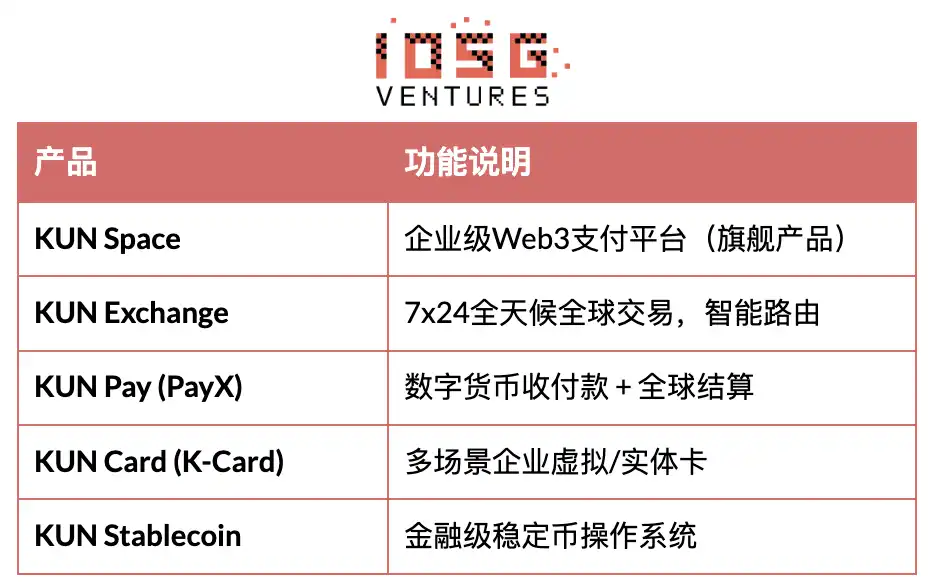
Note: KUN is exclusively for customers "outside mainland China and the U.S."
KUN Partnerships and Integrations
· Circle Payments Network (CPN): Live. As confirmed by Circle, KUN is a CPN partner, supporting 24/7 USDC/EURC stablecoin settlement. CPN's mainnet officially launched in mid-2025, with the first batch integrating 29 financial institutions.
· WSPN: WUSD (USD-Pegged Stablecoin) has been integrated into the KUN Space platform for cross-border corporate transactions (March 2024).
· Marco Digital (01942.HK): It has been reported that the first Asia-based USDT-backed insurance commission payment was completed through KUN (August 2025).
LianLian Pay
Stablecoin/Blockchain: Implemented, integrated stablecoin through partners.
LianLian Pay is one of the most active companies among China's cross-border payment companies in stablecoin strategy.
· Circle/USDC MOU: Still in the exploration phase, no product launched yet.
Signed an MOU with Circle to evaluate the use of USDC for large international payment flows. Exploring the application of Circle's Layer-1 blockchain Arc in future payment scenarios.
· BVNK Partnership: Integrated stablecoin payments that are live (June 2025).
Fund Flow: Merchants deposit stablecoins → BVNK automatically converts to USD → LianLian completes the transfer through a global network.
· RD Technologies: HKDR Stablecoin
Partnered with RD Technologies, RD plans to issue HKDR (Hong Kong Dollar-Pegged Stablecoin) on Ethereum. LianLian will use RD Technologies' RD ezLink corporate identity verification and RD Wallet payment tools, while also partnering with HashKey Exchange and Cobo.
HKDR is currently in the sandbox/testing phase. This partnership cannot fully launch until RD Technologies obtains the official HKMA stablecoin issuer license (expected in March 2026).
· DFX Labs: Virtual Asset Trading Platform (LianLian's wholly-owned Hong Kong-listed subsidiary)
Main business includes:
· Cryptocurrency Exchange: Buying and selling btc-42">Bitcoin and other cryptocurrencies
· Wallet Service: Virtual asset custody/storage
· Liquidity Service:
DFX Labs has obtained the VATP license issued by the Hong Kong SFC (Type 1-Securities Trading + Type 7-Automated Trading), condition: must complete SFC on-site inspection rectification, and pass an independent penetration test before full operation
RD Technologies (Circle Coin Technology)
Founded by former HKMA Chief, core competitive advantages:
· Regulatory Background: Former HKMA Chief as Chairman, first batch of Sandbox participants
· Dual License: SVF (Fiat Currency Payment) + Stablecoin Sandbox
Core Business: Payment (OristaPay) + Stablecoin Issuance (RD InnoTech)
· Operating under the SVF license (SVF0016) issued by HKMA in December 2022
· Multi-currency e-wallet, supporting 8 currencies, used for corporate payments and exchange rate management
· Transfer Methods: FPS (Fast Payment System), CHATS, Telegraphic Transfer (TT)
Two separate business lines:
1. OristaPay: Fiat-based B2B cross-border payments and wallet services, positioned as the "next-generation payment infrastructure provider"
2. RD InnoTech Limited: Focuses on stablecoin issuance (HKDR) and blockchain/Web3 business
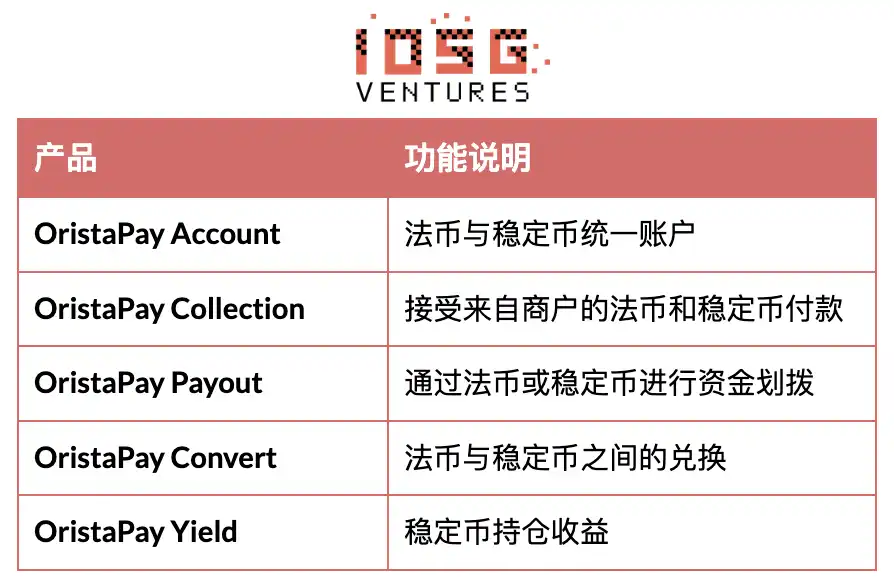
OristaPay (RD Wallet)
OristaPay has launched the Global Collection product, supporting fiat and stablecoin cross-border payments, 24/7 liquidity, with particular depth in the African and Latin American markets.
· Support collection of over 100 currencies, covering payments in 200+ countries and regions
· Accept major stablecoins, with fast settlement capability, real-time AML and KYT compliance screening
· Specific fees for Global Collection are not publicly disclosed
RD InnoTech Stablecoin Issuance — HKDR
RD InnoTech selected as one of the first members of the HKMA Stablecoin Issuers Sandbox, alongside Standard Chartered/Animoca/HKT (HKDG) and JD CoinLink (JD-HKD).
Stablecoin Regulatory Timeline:
· December 2022: HKMA issues SVF License (SVF0016)
· July 2024: Selected for HKMA Stablecoin Issuers Sandbox (first batch)
· August 2025: Hong Kong Stablecoin Act officially enacted
· September 2025: Brand restructuring, OristaPay and RD InnoTech split into separate entities
· January 2026: OristaPay Global Collection officially launches and supports stablecoins
Key Partnership Agreements
ZA Global jointly leads RD Technologies' $40 million Series A2 financing. Signed MOU with ZA Bank:
· Reserve Custody: ZA Bank to provide custody services for HKDR reserve assets
· Distribution: ZA Bank exploring a sales/distribution partnership for HKDR
Other Partners: Allinpay International, Ripple, Circle Payment Network (CPN)
Appendix: Cross-Border Payment Company Fee and Settlement Speed Comparative Analysis
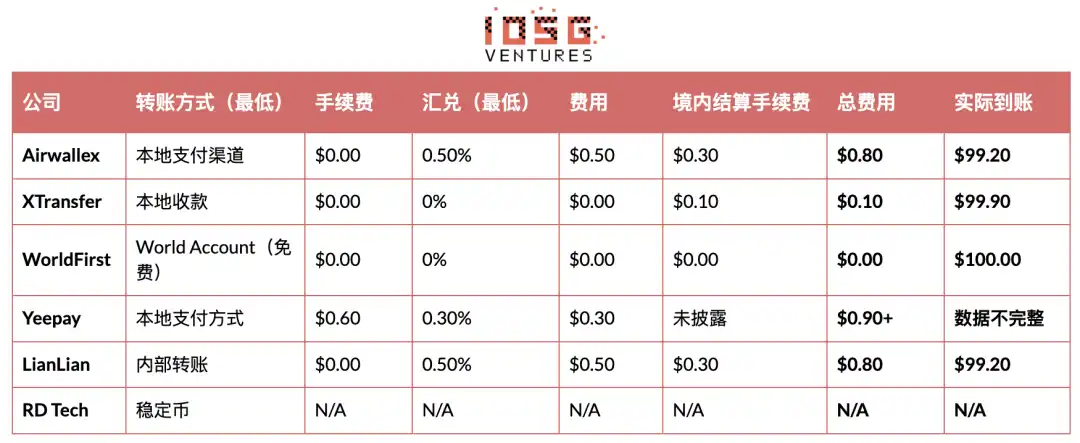
Fee Comparison: $100 Inbound to China Domestic (Lowest Fee)
Scenario: Transfer $100 USD from overseas to a domestic bank account, with each step using each company's lowest available fee.
Notes:
· XTransfer 0.1% settlement fee requires a certain transaction volume; standard fee goes up to 0.4%
· WorldFirst $0 total cost based on personal Alipay withdrawal; B2B bank withdrawal is 0.3% (B2C) or 0.4% (B2B)
· Yeepay local payment method fee range is 0.6%–1.6%, CNY settlement fee not publicly disclosed
· LianLian 0.3% settlement fee applies to high-volume users; standard fee can go up to 0.7%
· RD Technologies does not disclose fee and speed of settlement information
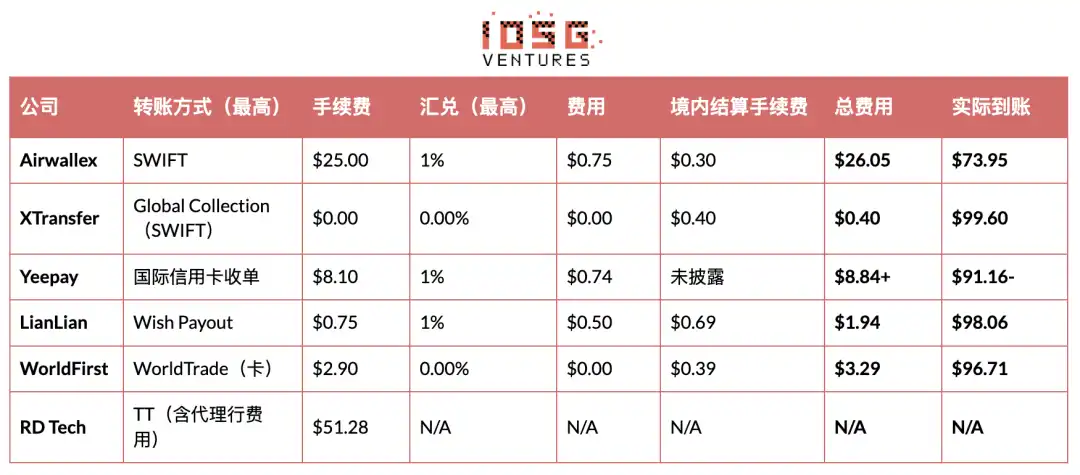
Fee Comparison: $100 Inbound to China Domestic (Highest Fee)
Notes:
· Airwallex SWIFT fee is a flat $25 per transaction; at a $100 transfer amount, it represents 25%, relatively reasonable for large transfers
· Yeepay Credit Card Acquisition: Base rate 3.8% + $0.30 + Cross-border surcharge 1% + Currency conversion fee 3%, total of $8.10 for a $100 transfer
· LianLian Wish Payout maximum fee rate is 0.75%; highest settlement fee is 0.7%
· RD Technologies' TT Telegraphic Transfer including correspondent bank fee is HKD 400 (approximately $51.28); does not provide domestic CNY settlement service
Speed Comparison: Inbound to China Domestic (Fastest)
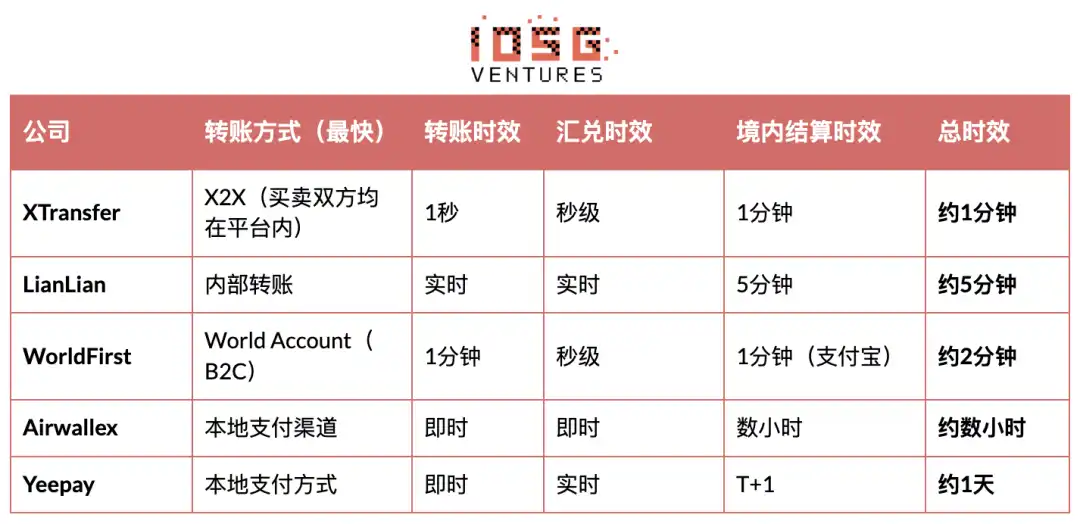
Speed Comparison: From Overseas to Mainland China (Slowest)
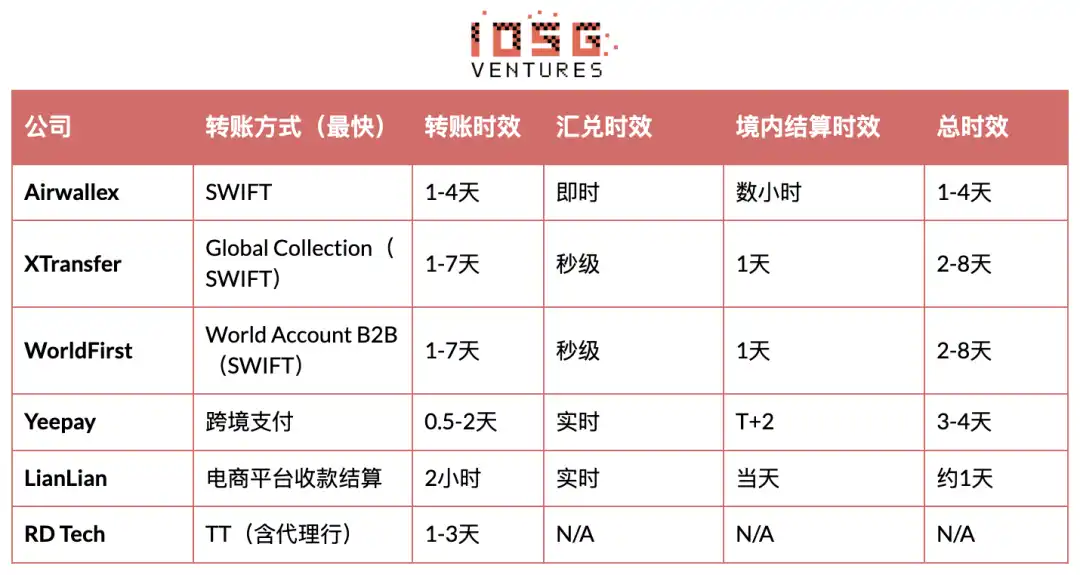
Notes:
· XTransfer X2X requires both buying and selling parties to be users of the XTransfer platform
· WorldFirst 1-minute Alipay receipt is for personal Alipay accounts, not corporate bank accounts
· Yeepay's fastest transfer is subject to the T+1 to T+2 CNY settlement timeframe
· RD Technologies does not provide CNY settlement services within mainland China, and the timeframe is only applicable to local Hong Kong
· The bottleneck for all companies' slowest routes lies in SWIFT, which adds 1-7 days of waiting time before the exchange/settlement
You may also like

22x Subsidy to 1 USD Revenue: How Long Can the TAO Growth Myth Last?

Use the Claude Wisely, One Piece is Enough

Netflix is Set to Bring FTX's Story to the Screen: Portraying History or Glamorizing a Scam?

People unable to buy Anthropic have driven its shadow stock up 16x

LALIGA Match Report: Vinícius scores as 10-man Real Madrid secure a 3-2 comeback victory in Madrid derby
In the early hours of March 23, 2026, Round 29 of LALIGA delivered a headline clash at the Santiago Bernabéu. Real Madrid hosted their local rivals, Atlético de Madrid, in a high-stakes encounter. Under referee José Munuera, the match unfolded at a fierce pace, packed with physical duels and momentum swings. After a five-goal thriller, Real Madrid held firm for a 3–2 home win, taking all three points. They remain second on 69 points, now four behind leaders Barcelona.
From a numbers standpoint, Real Madrid stayed composed under pressure, completing 526 passes with a 52.4% share of possession. Atlético struck first in the 33rd minute through Lookman. After the break, Real Madrid flipped the game: Vinícius converted a penalty to level, then Valverde fired them ahead. Molina pulled Atlético back on level terms, but Vinícius stepped up again in the 72nd minute to seal the win. Late drama followed as Valverde saw red, forcing Real Madrid to defend deep with ten men through the final stretch. Atlético's aggressive approach—12 fouls and 4 yellow cards—kept the pressure on, but they couldn’t stop the comeback.
WEEX Insights: As the official LALIGA partner in the Hong Kong and Taiwan regions, WEEX sees this win as a masterclass in control under pressure. Even after a red card and constant attacks, Real Madrid stayed sharp and executed with precision. That same discipline—staying calm in volatile moments and acting with clarity—reflects the core trading mindset WEEX stands for. LALIGA fan campaigns are coming soon—celebrate the game with WEEX.
About WEEX
Founded in 2018, WEEX has developed into a global crypto exchange with over 6.2 million users across more than 150 countries. The platform emphasizes security, liquidity, and usability, providing over 1,200 spot trading pairs and offering up to 400x leverage in crypto futures trading. In addition to the traditional spot and derivatives markets, WEEX is expanding rapidly in the AI era — delivering real-time AI news, empowering users with AI trading tools, and exploring innovative trade-to-earn models that make intelligent trading more accessible to everyone. Its 1,000 BTC Protection Fund further strengthens asset safety and transparency, while features such as copy trading and advanced trading tools allow users to follow professional traders and experience a more efficient, intelligent trading journey.
Follow WEEX on social media
X: @WEEX_Official
Instagram: @WEEX Exchange
Tiktok: @weex_global
Youtube: @WEEX_Official
Discord: WEEX Community
Telegram: WeexGlobalGroup

LALIGA Match Report: Araujo seals 1–0 win as Barça tighten grip on top spot
In the early hours of March 22 (Beijing Time), Barça edged Rayo Vallecano 1–0 at Camp Nou in a key Round 29 clash. The hard-earned win lifts Barça to 73 points, strengthening their hold on first place.
Barça controlled the game with 61% possession and a sharp 89% passing accuracy (460 passes). Rayo pushed back with intensity, earning 9 corners, but Barça's defense stayed solid. Yellow cards for Raphinha, Yamal, and Cubarsí highlighted the physical edge of the match. Second-half subs like Rashford and Olmo added fresh energy to help see out the result. Rayo remain 14th on 32 points.
WEEX Insights: As the Official LALIGA Partner in HK & TW, WEEX sees Barça’s 89% passing accuracy as a clear example of high execution with minimal error. Staying precise under pressure and finding the breakthrough reflects the same disciplined approach used in rational trading.
LALIGA interactive campaigns are coming soon—stay tuned with WEEX ⚽️
About WEEX
Founded in 2018, WEEX has developed into a global crypto exchange with over 6.2 million users across more than 150 countries. The platform emphasizes security, liquidity, and usability, providing over 1,200 spot trading pairs and offering up to 400x leverage in crypto futures trading. In addition to the traditional spot and derivatives markets, WEEX is expanding rapidly in the AI era — delivering real-time AI news, empowering users with AI trading tools, and exploring innovative trade-to-earn models that make intelligent trading more accessible to everyone. Its 1,000 BTC Protection Fund further strengthens asset safety and transparency, while features such as copy trading and advanced trading tools allow users to follow professional traders and experience a more efficient, intelligent trading journey.
Follow WEEX on social media
X: @WEEX_Official
Instagram: @WEEX Exchange
Tiktok: @weex_global
Youtube: @WEEX_Official
Discord: WEEX Community
Telegram: WeexGlobalGroup
These days, even hackers are losing money
Arm Chips In-House: Rewire News Brief

\$73 Billion OpenAI Aims for IPO: Drops Sora, Snubs Disney, Puts Microsoft in Risk Factors

The Chip Industry's Most Secure Middleman Just Took a Very Risky Turn

CZ's Latest Interview: My Experience is Replicable, Writing a Book to Inspire Young Entrepreneurs

Morning News | Invesco acquires a $900 million on-chain fund from Superstate; ParaFi has raised $125 million for its new fund; Solana Foundation launches developer platform SDP

What is the background of this new fund that the two major prediction market platforms have rarely joined forces to create?

SIREN, another leveraged scam

Token has become extremely popular, and the blockchain is very sad

Tether's major shareholder invests £12 million to support the "British version of Trump" in the cryptocurrency sector

Huang Renxun's Latest Podcast: Will NVIDIA Reach $1 Trillion? Will the Number of Programmers Increase Instead of Decrease? How to Deal with AI Anxiety?
Besides Resolv Hack, This DeFi Vulnerability Type Has Occurred Four Times
22x Subsidy to 1 USD Revenue: How Long Can the TAO Growth Myth Last?
Use the Claude Wisely, One Piece is Enough
Netflix is Set to Bring FTX's Story to the Screen: Portraying History or Glamorizing a Scam?
People unable to buy Anthropic have driven its shadow stock up 16x
LALIGA Match Report: Vinícius scores as 10-man Real Madrid secure a 3-2 comeback victory in Madrid derby
In the early hours of March 23, 2026, Round 29 of LALIGA delivered a headline clash at the Santiago Bernabéu. Real Madrid hosted their local rivals, Atlético de Madrid, in a high-stakes encounter. Under referee José Munuera, the match unfolded at a fierce pace, packed with physical duels and momentum swings. After a five-goal thriller, Real Madrid held firm for a 3–2 home win, taking all three points. They remain second on 69 points, now four behind leaders Barcelona.
From a numbers standpoint, Real Madrid stayed composed under pressure, completing 526 passes with a 52.4% share of possession. Atlético struck first in the 33rd minute through Lookman. After the break, Real Madrid flipped the game: Vinícius converted a penalty to level, then Valverde fired them ahead. Molina pulled Atlético back on level terms, but Vinícius stepped up again in the 72nd minute to seal the win. Late drama followed as Valverde saw red, forcing Real Madrid to defend deep with ten men through the final stretch. Atlético's aggressive approach—12 fouls and 4 yellow cards—kept the pressure on, but they couldn’t stop the comeback.
WEEX Insights: As the official LALIGA partner in the Hong Kong and Taiwan regions, WEEX sees this win as a masterclass in control under pressure. Even after a red card and constant attacks, Real Madrid stayed sharp and executed with precision. That same discipline—staying calm in volatile moments and acting with clarity—reflects the core trading mindset WEEX stands for. LALIGA fan campaigns are coming soon—celebrate the game with WEEX.
About WEEX
Founded in 2018, WEEX has developed into a global crypto exchange with over 6.2 million users across more than 150 countries. The platform emphasizes security, liquidity, and usability, providing over 1,200 spot trading pairs and offering up to 400x leverage in crypto futures trading. In addition to the traditional spot and derivatives markets, WEEX is expanding rapidly in the AI era — delivering real-time AI news, empowering users with AI trading tools, and exploring innovative trade-to-earn models that make intelligent trading more accessible to everyone. Its 1,000 BTC Protection Fund further strengthens asset safety and transparency, while features such as copy trading and advanced trading tools allow users to follow professional traders and experience a more efficient, intelligent trading journey.
Follow WEEX on social media
X: @WEEX_Official
Instagram: @WEEX Exchange
Tiktok: @weex_global
Youtube: @WEEX_Official
Discord: WEEX Community
Telegram: WeexGlobalGroup
LALIGA Match Report: Araujo seals 1–0 win as Barça tighten grip on top spot
In the early hours of March 22 (Beijing Time), Barça edged Rayo Vallecano 1–0 at Camp Nou in a key Round 29 clash. The hard-earned win lifts Barça to 73 points, strengthening their hold on first place.
Barça controlled the game with 61% possession and a sharp 89% passing accuracy (460 passes). Rayo pushed back with intensity, earning 9 corners, but Barça's defense stayed solid. Yellow cards for Raphinha, Yamal, and Cubarsí highlighted the physical edge of the match. Second-half subs like Rashford and Olmo added fresh energy to help see out the result. Rayo remain 14th on 32 points.
WEEX Insights: As the Official LALIGA Partner in HK & TW, WEEX sees Barça’s 89% passing accuracy as a clear example of high execution with minimal error. Staying precise under pressure and finding the breakthrough reflects the same disciplined approach used in rational trading.
LALIGA interactive campaigns are coming soon—stay tuned with WEEX ⚽️
About WEEX
Founded in 2018, WEEX has developed into a global crypto exchange with over 6.2 million users across more than 150 countries. The platform emphasizes security, liquidity, and usability, providing over 1,200 spot trading pairs and offering up to 400x leverage in crypto futures trading. In addition to the traditional spot and derivatives markets, WEEX is expanding rapidly in the AI era — delivering real-time AI news, empowering users with AI trading tools, and exploring innovative trade-to-earn models that make intelligent trading more accessible to everyone. Its 1,000 BTC Protection Fund further strengthens asset safety and transparency, while features such as copy trading and advanced trading tools allow users to follow professional traders and experience a more efficient, intelligent trading journey.
Follow WEEX on social media
X: @WEEX_Official
Instagram: @WEEX Exchange
Tiktok: @weex_global
Youtube: @WEEX_Official
Discord: WEEX Community
Telegram: WeexGlobalGroup


 App
App