
- Buy Crypto
- Markets
 Futures
- Spot
- Copy Trade
- Earn
- More
Is USDT's cross-chain version, USDT0, reliable?

Original Author: 0xTodd, Partner at Nothing Research
Wasn't Uni supposed to restart liquidity mining on 4.15? This time it involves 12 pools, many of which are related to $USDT0. So, I'll take this opportunity to talk about USDT0.
Firstly, What is USDT0?
In simple terms, USDT0 is the cross-chain version of USDT. The parent asset USDT exists on ETH and, through Layer0, can cross-chain to other chains, becoming USDT0.
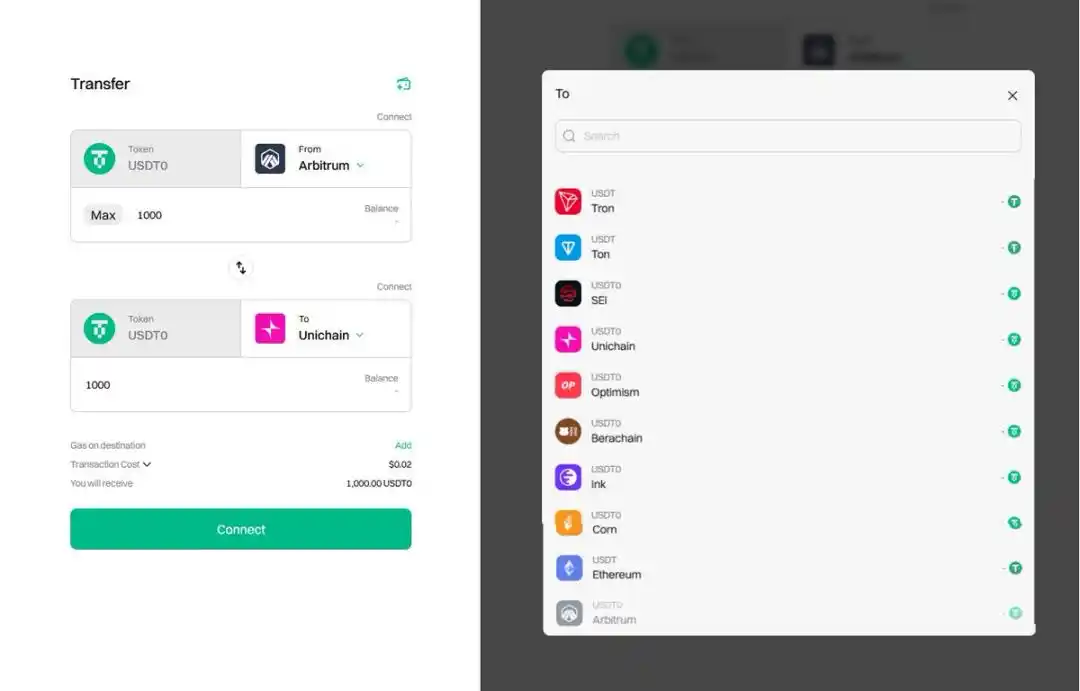
Supporters of USDT0 can also cross among themselves, for example, ETH-Arb-Unichain-BearChain-megaETH, and so on.
Who is Behind USDT0?
This is the most tricky part, and it took me a long time to figure it out.
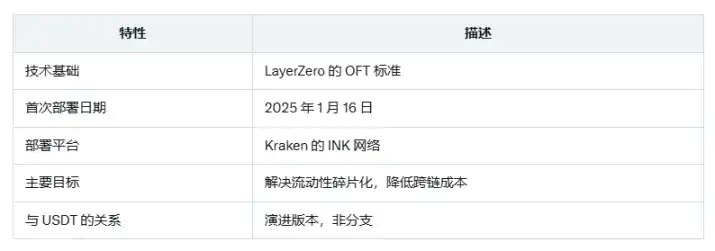
Behind this project, USDT0, is a collaboration of 1+3:
1. Led by Everdawn Labs;
2.1 Built on Layer0 technology;
2.2 Endorsed by Tether;
2.3 Endorsed by the INK public chain (issued by Kraken).
However, Everdawn Labs is a complete mystery online. I strongly suspect that it is a front for Tether. This is quite consistent with their style:
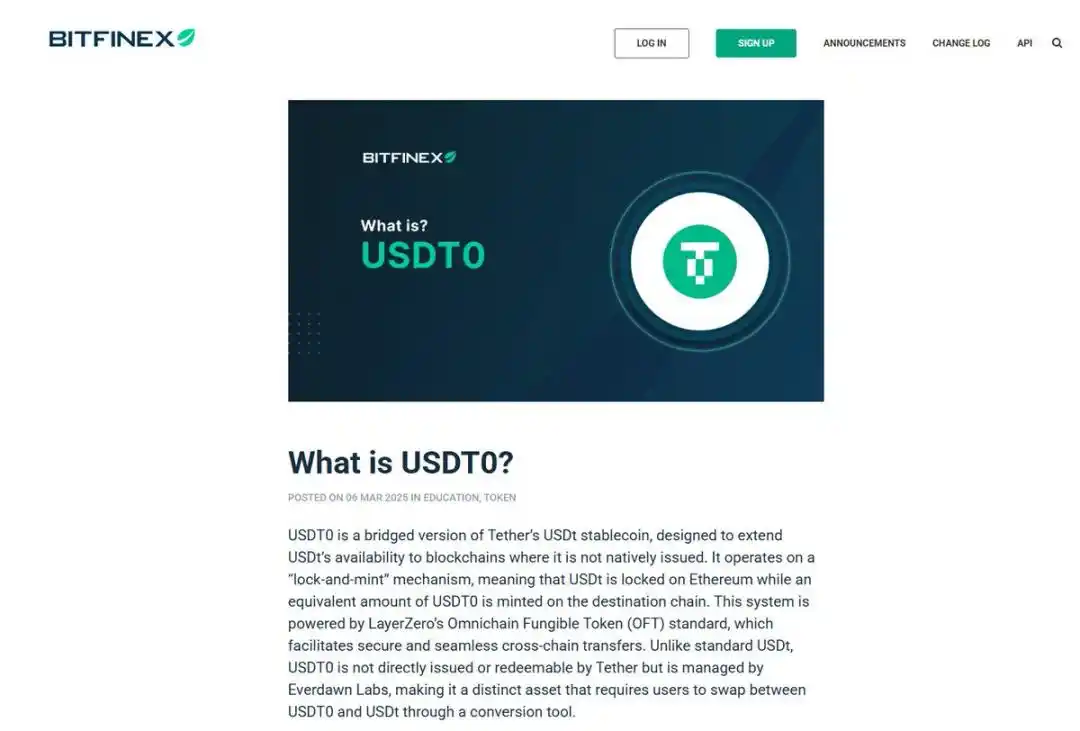
If nothing goes wrong—everyone benefits from the multi-chain convenience of USDT; if something goes wrong—then it's Everdawn Labs' fault, not Tether's. One reason for this speculation is that after the launch of USDT0 this year, the Tether team immediately expressed their support, followed by a dedicated article by Bitfinex. Without a strong relationship, they (BF and Tether) would not provide this kind of support.
What's the Evaluation?
In my opinion, if Tether is personally involved in this bridge, it's definitely a great move. This way, each chain's USDT can cross without loss, avoiding the need for various awkward third-party cross-chain bridges.
However, my level of trust in Layer0 is limited. In the past, there have been numerous high-profile cross-chain bridge failures, from multichain to thorchain. The technology behind cross-chain transactions is fundamentally simple, mainly relying on multi-signature setups. In the past, USDT used official bridges and did not utilize Layer0, a third-party bridge.
Official bridges are generally considered more secure, but they suffer from liquidity fragmentation. For example, if you want to move a large amount of capital from Arb to OP in a flash loan manner, you would need to first go back from Arb to ETH and then proceed to OP, which incurs additional costs for a faster transaction. PS: Not to mention chains like Sei, where even official bridge transactions incur fees for entry and exit.
On the other hand, if you opt for the USDT0 solution, Arb can directly move to OP in a flash and without loss. PS: Of course, there is a historical issue on OP where the USDT used is an older version of the ETH cross-chain version, while USDT0 represents the newer version. Thus, although theoretically viable to move funds from Arb to OP, in practice, it has been futile in the past. This is just an illustrative example.
New public chains, as they support USDT0 from the outset and lack historical issues, offer much higher usability. However, Tether itself is reluctant to directly engage in building this bridge and insists on sending a proxy like Everdawn Labs, which is a bit...
In the past, when I provided liquidity for $UNI on ETH, I only had to consider the minor third-party risks of Tether and Uniswap. Now, I have to bear an additional 4 risks: Everdawn going rogue, L0 going rogue, Unichain going rogue, USDT0 supporting other N chains, and each one potentially going rogue.
It sounds a bit overwhelming.
You may also like

Giannis Antetokounmpo's Investment in Kalshi Sparks Outrage: Idol Crossover or Insider Trading Scheme?

Mr. Beast Acquires Step: Top Streamer Enters Teen Finance Race?

Not Just Guessing Right or Wrong, Market Prediction Is Getting More and More “Fun”

$55,000 will be Bitcoin's make-or-break level

February 10th Key Market Information Gap, A Must-See! | Alpha Morning Report

About ERC-8004: Everything You Need to Know

ai.com's Debut Flop: After $70 Million Transaction, Did It Get a '504' Timeout?

FedNow versus The Clearing House: Who Will Win the Fed Payments Fray?

Recovering $70,000 in Lost Funds: The "Fragile Logic" Behind Bitcoin's Rebound

Mr. Beast acquires Step, Farcaster Founder Joins Tempo, what are the international crypto circles talking about today?
February 9th Market Key Intelligence, How Much Did You Miss?

After being questioned by Vitalik, L2s are collectively saying goodbye to the "cheap" era

WEEX AI Trading Hackathon Paris Workshop Reveals: How Retail Crypto Traders Can Outperform Hedge Funds
Witness how WEEX's Paris AI Trading Hackathon revealed AI's edge over human traders. Explore key strategies, live competition results & how to build your own AI trading bot.

U.S. Oil (USOR) Price Prediction 2026–2030
Key Takeaways U.S. Oil (USOR) is a speculative Solana-based crypto project that aims to index the United States…

USOR Surges on Meme Narrative Despite No Real-World Asset Backing
Key Takeaways: USOR, a Solana-based token, has seen a notable surge driven by speculative narratives rather than verifiable…

How to Buy U.S. Oil Reserve (USOR) Cryptocurrency
Key Takeaways U.S. Oil Reserve (USOR) is a Solana-based token primarily traded on decentralized exchanges (DEXs). Claims have…

USOR vs Oil ETFs: Understanding Why the ‘Oil Reserve’ Token Doesn’t Track Crude Prices
Key Takeaways The U.S. Oil Reserve (USOR) token has become noteworthy for its claims, yet it does not…

Trend Research Reduces Ether Holdings After Major Market Turbulence
Key Takeaways: Trend Research has significantly cut down its Ether holdings, moving over 404,000 ETH to exchanges recently.…


 App
App