
- Buy Crypto
- Markets
 Futures
- Spot
- Copy Trade
- Earn
- More
The Agent Spend Safely thing has already taken off

Author | Kaori
Editor | Sleepy.txt
Entering "create a card" in Claude will give you a Visa card after a few seconds. But this card is not for you; it's for AI.
Yesterday, X was buzzing with discussion about a product demo creating virtual cards for large models. It's not a new move for an ordinary person to apply for a virtual card for online transactions, but applying for a virtual credit card for AI sparked excitement in the Agent community, marking another development in the payment race.
If you follow this field, you'll notice such excitement coming in every few months. In September 2025, it was the x402 protocol; Coinbase and Cloudflare collaborated to turn the HTTP 402 status code into Agent's native payment channel. In October 2025, Visa and Mastercard simultaneously released the Agent Payment Protocol. And now, it's virtual cards.
The Agent payment race remains highly fragmented, with each tackling a piece of the puzzle, but no one has provided a complete solution yet. This article attempts to answer several questions: What exactly is an Agent virtual card? How does it differ from x402? What can virtual cards solve, and what can't they? And where do the opportunities lie in this race?

This article is sponsored by Kite AI
Kite is the first Layer 1 blockchain for AI agent payments, providing the underlying infrastructure for autonomous AI agents to operate in an environment with verifiable identity, programmable governance, and native stablecoin settlements.
Founded by AI and data infrastructure veterans from Databricks, Uber, and UC Berkeley, Kite has raised $35 million with investors including PayPal, General Catalyst, Coinbase Ventures, 8VC, and several top foundations.
What Is Agent's Virtual Credit Card
You definitely wouldn't want to hand over your credit card directly to an Agent, just like many people also refrain from installing OpenClaw on their primary computers.
The reason is simple: the risk exposure is uncontrollable. A regular credit card has no single transaction limit, no merchant restrictions, and cannot be instantly disposed of. Once the Agent makes a mistake or is attacked, your entire account is exposed to risk.
An Agent virtual card is not just sending AI a regular credit card; it is a programmable, restricted payment credential. Each card can have a spending limit, and if the Agent's spending exceeds the preset amount, the transaction is automatically declined. You can also pause or close any card at any time without affecting your underlying bank account.
Overall, the core value of a virtual card lies in its controllability.
Take the example of the virtual card project AgentCard, which sparked attention yesterday. It operates through a Model Context Protocol (MCP) server. The process is as follows: You first top up with the virtual card provider, the Agent calls an MCP tool like "create_card(amount=$50)," and the provider's API immediately issues a one-time prepaid Visa card with the exact amount locked at $50.
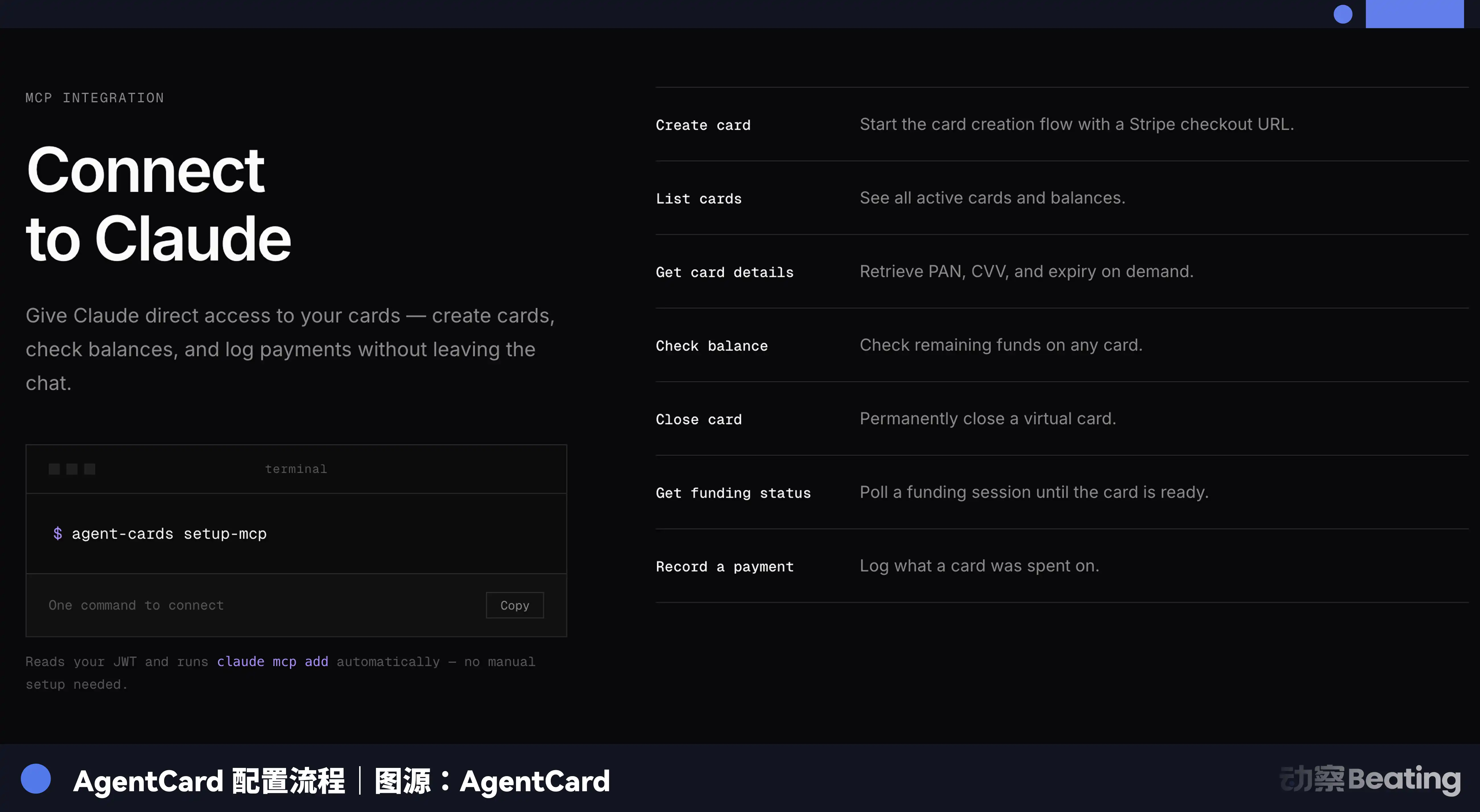
On the backend, there are several layers. The MCP server handles authentication and API calls with fintech companies, and the Agent does not see your actual funding source. The card is issued by the issuing bank on the Visa network, with funds deducted from your pre-linked bank account or credit card. The Agent receives a temporary card number for web checkout or API payment, and the card is automatically deactivated after use.
The setup takes about 5 minutes and is done through CLI or configuration files. The entire process is highly isolated, and your real card information is never exposed to the Agent.
What Problem Does the Virtual Card Aim to Solve?
What people call "agent-based commerce" is often just an additional step in the human shopping process.
You research a pair of headphones using ChatGPT and then place the order yourself; this is the first layer. Or you have ChatGPT find the headphones and click to purchase, you confirm the payment; this is the second layer. Or you set a condition for the Agent to automatically buy when the price drops below a certain number; this is the third layer.
In all three cases, the Agent uses your payment credential, and major card organizations and AI labs are already building underlying protocols for these scenarios.
The truly interesting scenarios start from the fourth layer.
Your Agent needs to call another large model's API, such as switching from Anthropic to a cheaper inference model, purchasing an expensive dataset to complete a research task, or hiring another Agent to handle a subtask.
In these scenarios, the Agent is not swiping your card; it needs its own payment credentials.
The current practice is for developers to buy these things for the Agent and then hand over access. This is not agency; it's called acting as a purchasing agent.
To fully liberate humans (but still not completely relinquish trust), a restricted Agent payment method is needed, and the programmable nature of virtual cards aligns perfectly with this need.
Why is this problem only emerging now? Because currently three conditions have matured simultaneously.
The first condition is the demand side. The lobster installation activities thriving in major cities around the world are a prime example.

The second condition is the supply side. Stripe Issuing can already create and manage virtual cards via an API, with the necessary technology and protocols in place.
The third condition is the card networks' move. Both Visa and Mastercard have simultaneously released Agent payment protocols, with Cloudflare participating in the development of technical standards, Fiserv becoming one of the first major payment processors to support these protocols, and platformization is complete.
From grassroots entrepreneurs to card network giants, everyone has seen the same thing at the same time: Agents need their own financial infrastructure.
Structural Limitation of Virtual Cards
Virtual cards solve today's problem, but they inherit an old issue from the banking card network: slow settlement.
Most people outside the payment industry are unaware that when you swipe a card at a store, the merchant doesn't get the money immediately. It takes a day, a few days, or even 30 days for cross-border payments to receive funds. Visa itself doesn't move money; banks do, and bank settlements are slow and costly.
For an Agent, this problem is magnified. If your Agent is buying a large number of tokens from Anthropic and the business suddenly takes off, you might run out of funds before the revenue arrives.
A virtual card has a second limitation: cross-border costs. Cross-border payments with traditional bank cards involve currency exchange, intermediary fees, and compliance checks. For an Agent that needs to call APIs and services globally, these friction costs can quickly add up.
The third limitation is a lack of programmability. As your Agent's transaction volume grows and the number of sub-Agents to manage increases, the flexibility of virtual cards becomes insufficient. If you use virtual cards, the main Agent must apply for each sub-Agent individually, or spend a few dollars each time to create a new card.
Understanding these limitations helps to see why the x402 protocol sparked attention several months ago.
At its core, x402 bypasses the bank card network and directly achieves on-chain payments using stablecoins at the HTTP layer. For example, suppose your Agent needs to call a paid API to retrieve real-time data. With a virtual card, you would have to create a card first, register an account on the service provider's website, link the card, subscribe to a monthly plan, obtain an API key, and then configure it for the Agent.
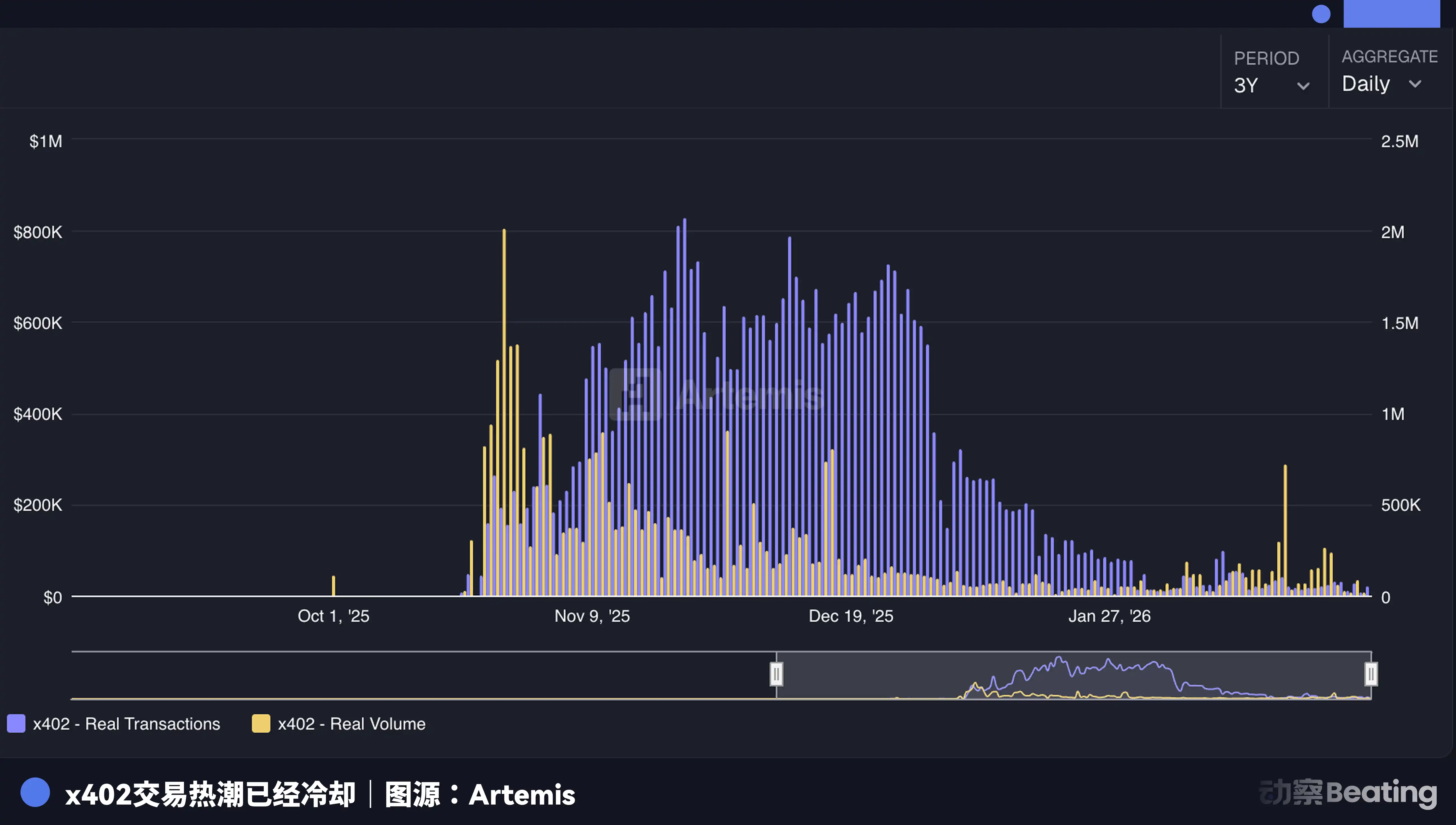
With x402, the Agent directly sends an HTTP request, the server responds with a 402 status code and price, the Agent automatically signs a USDC transfer, the server confirms receipt, and returns the data. No registration is needed, no subscription required, pay-as-you-go.
These two approaches are not mutually exclusive. Virtual cards are suitable for Agents to pay at Visa-accepting merchants, online shopping, SaaS subscriptions, and paying cloud service bills. x402 is suitable for direct payments between Agents, calling APIs, purchasing data, hiring other Agents to complete subtasks.
Currently, most merchants only accept Visa/Mastercard, so virtual cards are the solution available today. But for scenarios like Agent API calls and Agent collaboration, x402, as a native payment protocol, is more suitable.
There is another hybrid solution using stablecoins to speed up bank card backend settlement. The frontend remains card swiping, while the backend shifts to instant on-chain settlements. Some say stablecoins will disintermediate the bank card network, but this is a misunderstanding. Stablecoins cannot provide uncollateralized credit, chargeback rights, and Visa-level anti-fraud capabilities. They are meant to accelerate bank cards, not replace them.
The three-layer solution is progressive: virtual cards address compatibility, stablecoins address settlement speed, native wallets address programmability. Which layer you are in today depends on what kind of counterparty your Agent is dealing with.
The Three Parallel Entrepreneurial Tracks
The payment startup aimed at Agents will eventually roll into an unexpected place for many: machine organizational theory.
Think about how today's businesses manage employee spending. Company cards, expense rules, budget centers, approval processes, audit trails. This system is the infrastructure of corporate governance. Now, businesses need to provide the same thing to AI Agents.
This means that at least three entrepreneurial tracks are opening up simultaneously.
The first track is the Agent-first issuing platform. Currently, multiple platforms are entering the field, but most are still at the surface level of virtual card issuance.
The real moat lies in risk control models, billing logic, and developer experience. For example, the onboarding process does not require filling out forms, but rather registering via API, the risk control model is based on Agent behavior patterns rather than human credit history, and the billing logic is based on token consumption rather than monthly bills.
The second track is KYA infrastructure. KYA stands for Know Your Agent, corresponding to traditional finance's KYC. When the Agent becomes a merchant and buyer, knowing your customer becomes knowing your Agent. Who developed it? What model is it running on? What are the historical transaction records and behavior patterns? This is a whole new trust layer.
A startup called Skyfire is already working on this. It has launched the KYAPay protocol, allowing merchants to verify an Agent's identity and authorization status. In December 2025, Skyfire partnered with Visa to complete an end-to-end Agent shopping demo: the Agent autonomously researched products, compared prices, made a purchase, identity verified throughout the process by the KYA protocol, and payment handled by Visa's Trusted Agent Protocol.
However, entering 2026, Skyfire's official channels have gone silent, with no new products or protocol developments. It can be said that there is still no unified standard in the entire industry at the moment, presenting an untouched opportunity.
The third track is the settlement and audit network for Agent-to-Agent transactions.
When the main Agent manages dozens of sub-Agents, each with their wallets and transaction records, who will reconcile? Who will audit? This is the "Big Four" accounting firms opportunity of the Agent economy.
History always rhymes. Around 2000, eBay created a marketplace for ordinary people to buy and sell from each other. Those individual sellers could not get a merchant account, but PayPal enabled them to receive money. By the end of that year, PayPal processed 40% of eBay auction payments. Around 2010, independent developers wanted to receive online payments, both PayPal and Cybersource could do it, but the process was long and painful; Stripe solved the problem with seven lines of code.
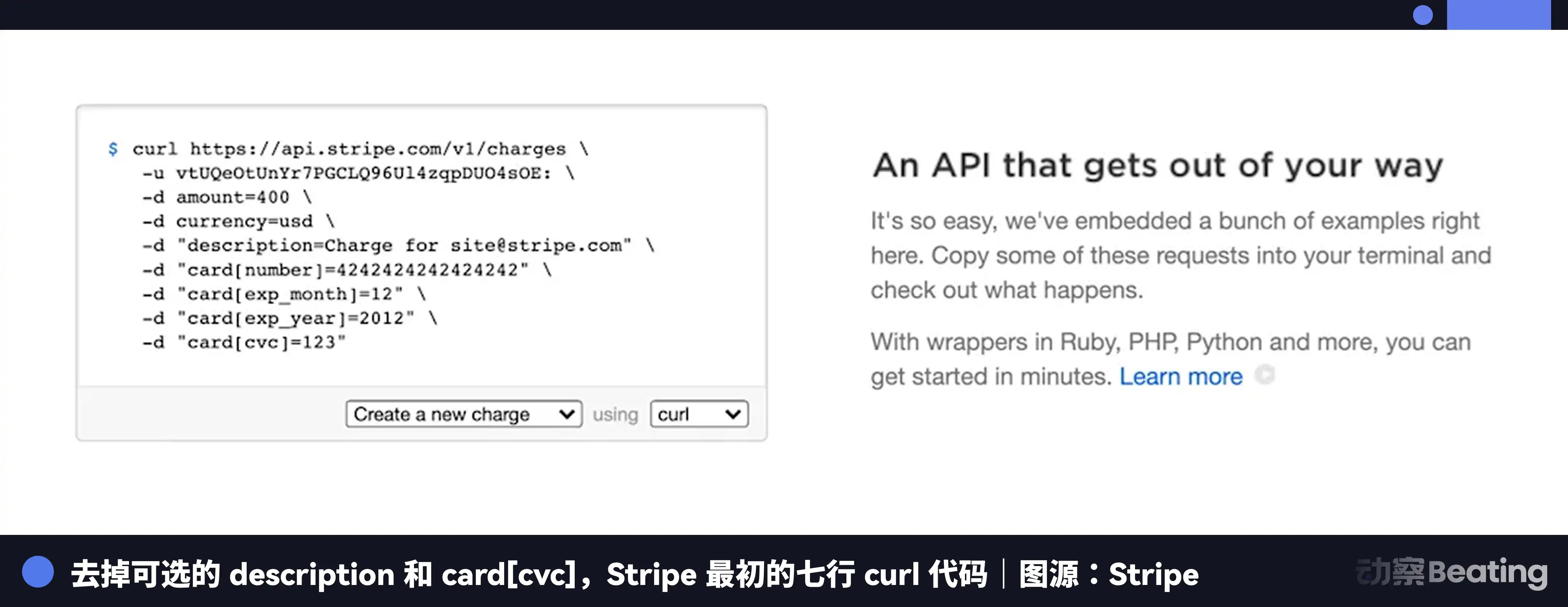
The pattern remains the same, each shift in platform paradigm will spawn a new set of merchants that existing payment systems cannot serve. Winners cater to merchants deemed not worthy of risk underwriting by traditional incumbents.
Who are today's new merchants?
By 2025, GitHub adds around 36 million developers. In YC's winter 2025 batch, a quarter of companies have over 95% of their codebase generated by AI. On Bolt.new, 67% of 5 million users are non-professional developers.
Millions of ordinary people who couldn't write production-level code two years ago are now shipping software.
Back to that tweet at the start. Giving AI a Visa card to spend on its own might seem like a product feature, but it's actually the beginning of a paradigm shift.
From grassroots entrepreneurs to card network giants, everyone realizes that Agents need their own financial infrastructure. But virtual cards, stablecoins, wallets, are all just scaffolding.
The real change runs deeper. When natural language becomes the native interface for transactions, payments cease to be a standalone industry; they become a foundational capability embedded in every interaction.
Back when eBay's individual sellers didn't care about the technical nuances between ACH and credit card networks. All they needed was something to start receiving payments, which PayPal provided them. Today, tens of millions of Vibe Coders and their Agents don't care about the underlying bank card versus stablecoin debate. They just need to speak a word, and the money is there.
Whoever gets there first will be the next PayPal.
You may also like

WEEX AI Hackathon Champions Crowned, Revealing Future of AI Trading
The first-ever WEEX AI Hackathon has concluded, with 10 winners emerging from over 200 global teams. Beyond its $1.8 million prize pool, the event marked a milestone—proving that the future of AI trading belongs to accessible, AI-powered innovation.

View: No Hype, No FUD, I Rate OpenClaw at 65 Points

Single-day Oil Price Plunge Exceeds 30%, Copilot Cowork Feature Launched, What Is the English-Speaking Community Talking About Today?

After the rise in the stablecoin's status, long-time partners Circle and Stripe vie for dominance

WEEX Trade to Earn: Turn Futures Trading into Instant WXT Rewards
Join WEEX Trade to Earn and earn instant WXT rebates on every futures trade. Boost rewards with referrals and tasks. Trade more, earn more on WEEX exchange.

Trading Everything, Never Closing: RWA Perpetual Contracts (Part 1)

Morning News | Nscale completes $2 billion Series C funding; 20 millionth Bitcoin has been mined; Polymarket will launch S&P 500 binary options products

Dialogue between Vitalik and Suji: Why have decentralized social products failed?

Trading Never Sleeps: On-Chain, Crude Oil, and Leverage

On-chain Yield Panorama: The Evolution from Interest-bearing Stablecoins to Crypto Credit Products

RootData announced the integration with OpenClaw, and these gameplay features have gone viral

Key Market Intelligence on March 9th, how much did you miss out on?

a16z: After AI Superpowers, Where to Next for Humanity?

Why Does Oil Go Up When Bitcoin Goes Down?

Decoding 112,000 Polymarket Addresses: The Top 1% Making Money Are Doing These Five Things
AAVE founder issues a warning: DeFi must never become the exit liquidity for Wall Street private credit

The cryptocurrency industry has waited for five and a half years, and what they got is half a ticket
The trend of Ethena reveals what information about the cryptocurrency market
WEEX AI Hackathon Champions Crowned, Revealing Future of AI Trading
The first-ever WEEX AI Hackathon has concluded, with 10 winners emerging from over 200 global teams. Beyond its $1.8 million prize pool, the event marked a milestone—proving that the future of AI trading belongs to accessible, AI-powered innovation.
View: No Hype, No FUD, I Rate OpenClaw at 65 Points
Single-day Oil Price Plunge Exceeds 30%, Copilot Cowork Feature Launched, What Is the English-Speaking Community Talking About Today?
After the rise in the stablecoin's status, long-time partners Circle and Stripe vie for dominance
WEEX Trade to Earn: Turn Futures Trading into Instant WXT Rewards
Join WEEX Trade to Earn and earn instant WXT rebates on every futures trade. Boost rewards with referrals and tasks. Trade more, earn more on WEEX exchange.


 App
App