
What Is Burn Reward Systeam (BURN) Crypto?


What Is Burn Reward Systeam (BURN) Crypto?
Burn Reward Systeam (BURN) crypto is a deflationary token that combines token burning, dividend-style rewards, and referral incentives. The idea is simple: users burn tokens to permanently reduce supply, creating scarcity, while earning rewards in return.
The project talks about network-wide dividend sharing and personal burn tracking, but here's the thing: the branding sounds good, but the actual reward calculations and long-term sustainability depend entirely on ongoing participation and token demand. That's not guaranteed. Deflationary mechanics can attract interest, but without transparent revenue sources, it's hard to know what's really happening under the hood.
How Does the BURN Token Work?
Let's break down how this thing operates. The BURN token mechanism revolves around two main ideas: supply reduction and reward distribution.
When someone burns tokens, those tokens are permanently destroyed. The circulating supply goes down, and in theory, scarcity goes up. Basic supply and demand—if demand stays the same or grows, less supply should support higher prices.
At the same time, the system tracks several performance indicators that determine rewards:
- Network-wide profit sharing in BNB
- Personal burn totals
- Dividend weight points
- Estimated burning value in BNB
- Claimed and remaining earnings
To unlock certain promotional privileges, users need to burn at least 10,000 tokens. That's a real threshold—it ties participation directly to token destruction and creates an entry barrier.
There's also a referral reward model built in: 5% rewards for first-generation referrals and another 5% for second-generation referrals, totaling 10% potential promotional rewards. This structure incentivizes community growth, but referral systems only work when new users keep joining. If that slows down, the whole thing can stall.
BURN Token Utility and Dividend Structure
Unlike utility tokens with clear infrastructure, Burn Reward Systeam crypto focuses on dividend-style sharing tied to user activity. The system claims to distribute earnings in BNB, but honestly, where those rewards actually come from isn't clear in public materials.
In models like this, rewards typically come from transaction fees or token purchases. Without transparent revenue streams, it's hard to know what's really happening.
Deflationary mechanics can attract speculation—especially when supply visibly shrinks. But long-term viability? That requires real transparency and audits, not just marketing.
Before getting involved, verify on-chain data yourself. Check token distribution, liquidity depth, and actual trading volume. Don't just take the website's word for it.
Should I Invest in Burn Reward Systeam (BURN) Crypto?
Let's be real—burn-based crypto projects often create strong marketing narratives around scarcity. And sure, reducing supply can support price appreciation under the right conditions. But it's not a guarantee, and it's definitely not magic.
Here's what you should be asking:
- Are the smart contracts transparent and verifiable?
- Where do the rewards actually come from?
- How deep is the liquidity? Can you actually sell when you want to?
- Has the code been audited by a reputable firm?
- What's the regulatory situation in your jurisdiction?
Referral reward systems can amplify early growth, but they also create dependency on continuous expansion. If new users stop joining, dividend flows can dry up fast. It's a classic pyramid dynamic—works great at the start, gets shaky later.
And that 10,000 token burn requirement for promotional access? That's a real entry threshold. It might not suit smaller investors or people just wanting to test the waters.
When you're researching what is Burn Reward Systeam (BURN) crypto, look past the promotional language. Focus on verifiable blockchain data. Check the contract. Look at the holders. See if the numbers actually make sense.
Final Thoughts: Should You Pay Attention to BURN?
Burn Reward Systeam (BURN) is a deflationary token built around supply reduction, dividend sharing, and referral incentives. The idea of earning rewards while supply shrinks sounds good—and under the right conditions, it can work.
But sustainability is the real question. Without transparent revenue sources and steady user participation, the model struggles. Referrals drive early growth but create dependency on constant expansion.
If you explore BURN, verify everything yourself—contract address, on-chain data, liquidity. Crypto is volatile and speculative.
Ready to trade? WEEX offers zero fees, instant execution, and the security you need. Register on WEEX Now and Start Trading!
FAQ
Q1: What is Burn Reward Systeam (BURN) crypto?
A: It's a deflationary token project that combines token burning, dividend distribution, and referral incentives. Users burn tokens to reduce supply and earn rewards.
Q2: How does BURN token burning work?
A: Users permanently destroy tokens by sending them to a burn address. This reduces circulating supply and earns dividend weight points in the system.
Q3: Does BURN crypto offer referral rewards?
A: Yes. The system advertises 5% rewards for first-generation referrals and 5% for second-generation referrals, totaling 10% potential promotional rewards.
Q4: Is BURN a good investment for 2026?
A: That depends on adoption, execution, and market conditions. Deflationary tokens can perform well with steady demand, but they're also highly speculative. Do your own research.
You may also like

World Collective Oil Reserve (WCOR) Price Prediction 2026-2045: Expert Insights
WCOR (World Collective Oil Reserve) is a Solana-based cryptocurrency token that promotes an “oil reserve + real-world asset (RWA) narrative.” However, there is no public evidence that it is actually backed by physical oil assets. It is essentially a highly speculative, narrative-driven token. Its current market cap is around $14 million, with relatively low liquidity and high volatility, and its price is mainly driven by market sentiment and hype. Most analyses suggest limited short-term upside, with a possible gradual increase to around $0.02 by 2030. Overall, it is considered a high-risk crypto asset driven more by narrative speculation than fundamentals.
WEEX Gold & Silver 0% Fees Event: Trade Metals, Crude Oil and Stock Futures With Zero Fees
Join the WEEX 0-fee futures event from April 16 to May 31, 2026. Trade eligible gold, silver, crude oil, and stock futures with 0% fees.
Can PAC Coin Reach $1 Soon? Analyzing Public Asset Control
PAC is a Solana-based meme token with a government-themed narrative, but it is highly speculative.
At its current price (~$0.0009) and 1B supply, reaching $1 would require a $1B market cap, which is very unlikely.
Short-term moves to $0.001 or $0.01 are more realistic, but the token is highly volatile due to low liquidity and hype-driven trading.
Overall, $1 is not a realistic target, and PAC is better suited for short-term speculation than long-term investment.
What Is SAOS? Strategic American Oil Supply Token Explained
SAOS is a meme token on Solana with a 75,000 USD market cap and 22,000 USD locked liquidity, positioned around oil supply themes but lacking real asset backing
It thrives on pure narrative speculation, with no utility, website, or doxxed team, making it highly volatile and attention-dependent
Traders should distinguish SAOS from legitimate real-world asset projects, as its branding is speculative rather than substantive
Positive aspects include locked liquidity reducing rug pull risks, but low trading activity signals high uncertainty
NBIS Stock: What Nebius’ AI Cloud Surge Means Now
NBIS stock jumped as Nebius reported rapid AI cloud growth. See the key Q1 2026 numbers, catalysts, valuation risks, and what to watch next.

What Is Public Asset Control (PAC) Coin? Explained for Beginners
Public Asset Control (PAC) is a Solana-based token that uses a “government asset control” narrative involving oil and gold themes, but it has no verified ties to any real institutions or governments. It is mainly an entertainment-focused, speculative meme coin.
The project’s claims about links to entities like BlackRock or Palantir are unverified, and its own disclaimer states it is not a real financial or institutional asset. Like many new Solana tokens, PAC is highly volatile, with low liquidity and limited transparency, including no fully verified audit.
Overall, PAC is a high-risk speculative token driven by hype and storytelling rather than real utility. Beginners are advised to be cautious, verify contract details, and prioritize risk control before considering any trading.
Public Asset Control: What PAC Token Really Is
Public Asset Control PAC is a Solana token with bold asset-control branding. Learn what it is, what is verified, and the key trading risks.

Why Is Chinese Oil Asset Reserve (COAR Crypto) Trending Now?
Why is Chinese Oil Asset Reserve trending now? Learn the latest COAR crypto price action, trading volume, oil narrative, Solana pair data, and what is driving attention today.
How to Buy Chinese Oil Asset Reserve (COAR) Token in 2026: Latest Step-by-Step Guide, Contract Address, and Safe Buying Tips
How to buy Chinese Oil Asset Reserve (COAR) token step by step, including the official COAR contract address, Solana wallet setup, SOL funding, and latest market data.
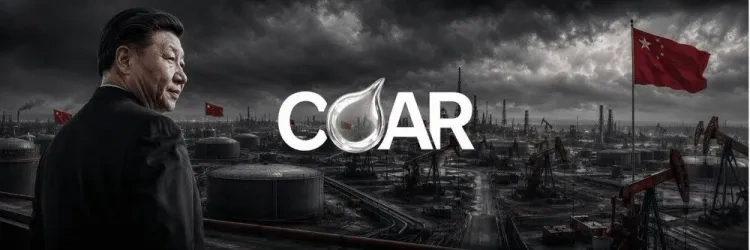
COAR Coin: What Chinese Oil Asset Reserve Really Is
COAR coin is a new Solana oil-narrative token. Learn what Chinese Oil Asset Reserve claims, how to verify the contract, and key trading risks.
Did the CLARITY Act Pass Today? Latest Status and the History of the Crypto Bill
SEO meta description: Did the CLARITY Act pass today? Read the latest crypto bill update, the history of the CLARITY Act, House and Senate votes, and what happens next for U.S. crypto regulation.
What Is Chinese Oil Asset Reserve (COAR) Token? $COAR and Coar Stock Relationship Explained
Chinese Oil Asset Reserve (COAR) token explained, $COAR price, Solana details, and the relationship between COAR and Coar stock. Learn the latest facts.
Trade to Earn on WEEX: Join the Futures Trading Event and Earn Real-Time WXT Rewards Throughout May 2026
Join the WEEX Trade to Earn Series Five event from May 1–31, 2026 and earn real-time WXT rewards through futures trading. Boost your rebate level, complete missions, invite friends, and maximize your trade to earn rewards with USDT-M futures trading.
What Is World Cup Meme Coin? Football Meme Crypto Narrative Explained
World Cup meme coin $WCMEME is a Solana token that collapsed 96% in 24 hours. Learn how football meme narratives work and the risks involved.

Trade to Earn With Futures Trading on WEEX: How Smart Traders Are Turning Every Position Into WXT Rewards
Join the WEEX Trade to Earn Series Five campaign and earn real-time WXT rewards through futures trading from May 1–31, 2026. Upgrade mining levels, unlock higher rebate ratios, complete missions, and maximize your trade to earn rewards with USDT-M futures trading.
CBRS Stock: What to Know About Cerebras After Its IPO
CBRS stock surged after Cerebras priced its IPO at $185. Learn what the AI chipmaker does, why valuation matters, and what risks to watch.

SpaceX IPO Stock Market Impact: What Investors Should Watch
SpaceX’s IPO could reshape indexes, liquidity, space stocks, and crypto risk appetite. Here is what matters before the listing.

HMSTR Token Price: What Moves Hamster Kombat Now
Track HMSTR token price, supply, catalysts, and risks. Learn what drives Hamster Kombat price action and what traders should watch.
World Collective Oil Reserve (WCOR) Price Prediction 2026-2045: Expert Insights
WCOR (World Collective Oil Reserve) is a Solana-based cryptocurrency token that promotes an “oil reserve + real-world asset (RWA) narrative.” However, there is no public evidence that it is actually backed by physical oil assets. It is essentially a highly speculative, narrative-driven token. Its current market cap is around $14 million, with relatively low liquidity and high volatility, and its price is mainly driven by market sentiment and hype. Most analyses suggest limited short-term upside, with a possible gradual increase to around $0.02 by 2030. Overall, it is considered a high-risk crypto asset driven more by narrative speculation than fundamentals.
WEEX Gold & Silver 0% Fees Event: Trade Metals, Crude Oil and Stock Futures With Zero Fees
Join the WEEX 0-fee futures event from April 16 to May 31, 2026. Trade eligible gold, silver, crude oil, and stock futures with 0% fees.
Can PAC Coin Reach $1 Soon? Analyzing Public Asset Control
PAC is a Solana-based meme token with a government-themed narrative, but it is highly speculative.
At its current price (~$0.0009) and 1B supply, reaching $1 would require a $1B market cap, which is very unlikely.
Short-term moves to $0.001 or $0.01 are more realistic, but the token is highly volatile due to low liquidity and hype-driven trading.
Overall, $1 is not a realistic target, and PAC is better suited for short-term speculation than long-term investment.
What Is SAOS? Strategic American Oil Supply Token Explained
SAOS is a meme token on Solana with a 75,000 USD market cap and 22,000 USD locked liquidity, positioned around oil supply themes but lacking real asset backing
It thrives on pure narrative speculation, with no utility, website, or doxxed team, making it highly volatile and attention-dependent
Traders should distinguish SAOS from legitimate real-world asset projects, as its branding is speculative rather than substantive
Positive aspects include locked liquidity reducing rug pull risks, but low trading activity signals high uncertainty
NBIS Stock: What Nebius’ AI Cloud Surge Means Now
NBIS stock jumped as Nebius reported rapid AI cloud growth. See the key Q1 2026 numbers, catalysts, valuation risks, and what to watch next.
What Is Public Asset Control (PAC) Coin? Explained for Beginners
Public Asset Control (PAC) is a Solana-based token that uses a “government asset control” narrative involving oil and gold themes, but it has no verified ties to any real institutions or governments. It is mainly an entertainment-focused, speculative meme coin.
The project’s claims about links to entities like BlackRock or Palantir are unverified, and its own disclaimer states it is not a real financial or institutional asset. Like many new Solana tokens, PAC is highly volatile, with low liquidity and limited transparency, including no fully verified audit.
Overall, PAC is a high-risk speculative token driven by hype and storytelling rather than real utility. Beginners are advised to be cautious, verify contract details, and prioritize risk control before considering any trading.


