
- Buy Crypto
- Markets
 Futures
- Spot
- Copy Trade
- Earn
- More
What Is Liquidation in Crypto? Essential Guide for Traders to Manage Risks and Avoid Losses

As of February 4, 2026, the crypto market continues to grapple with high volatility, with Bitcoin experiencing a 5% dip in the last 24 hours according to CoinMarketCap data extracted at 08:36:08 UTC. This kind of price swing has led to increased liquidations across major exchanges, totaling over $200 million in forced closures in the past week alone, as reported by CoinGlass. In this article, we’ll break down what liquidation in crypto really means, explore its mechanics in margin trading, and provide practical strategies to steer clear of it. You’ll get insights into short-term market risks tied to leverage, long-term forecasts for safer trading practices, and technical analysis tips to enhance your strategy, all aimed at helping beginners navigate the crypto landscape with confidence.
Understanding Liquidation in Crypto: The Basics Every Trader Needs to Know
Liquidation in crypto happens when an exchange automatically sells off a trader’s assets to cover losses from a leveraged position that goes south. Think of it as the exchange’s way of hitting the emergency brake before your account balance hits zero or worse, goes negative. This process is especially common in margin trading, where you borrow funds to amplify your bets on assets like Bitcoin or Ethereum. According to CoinMarketCap, as of February 4, 2026, the total market cap for cryptocurrencies stands at around $2.5 trillion, with leveraged trading volumes surging amid recent regulatory news from the SEC about stricter oversight on derivatives.
In essence, when you open a leveraged trade, you’re putting up collateral—often called the initial margin—to secure the borrowed amount. If the market moves against you, losses eat into that collateral. Exchanges set a liquidation price, which is the threshold where they step in to close your position. For instance, if you’re long on Bitcoin with 10x leverage and the price drops sharply, that liquidation price could be triggered much faster than with lower leverage. This mechanism protects not just the trader from insurmountable debt but also the platform from absorbing those losses, maintaining overall market stability.
Crypto analyst Alex Becker, in a recent interview with CoinDesk, noted, “Liquidation isn’t just a risk—it’s a reminder that leverage is a double-edged sword. In volatile markets like we’re seeing now, understanding your liquidation price can mean the difference between a minor setback and wiping out your portfolio.” This ties into broader trends, where DeFi platforms have seen a 15% increase in liquidation events year-over-year, per data from Dune Analytics.
How Does Liquidation Work in Margin Trading and Leveraged Positions?
Diving deeper into the mechanics, liquidation kicks in during margin trading when your account’s maintenance margin falls below the required level. You start by depositing initial margin, say 10% of the position’s value, to open a trade with leverage. The exchange monitors this in real-time, calculating your equity against ongoing market prices. If adverse price movements deplete your margin close to zero, the system liquidates by selling your assets at market price, often leading to slippage in highly volatile conditions.
Consider a real-world scenario: A trader opens a $10,000 long position on Ethereum with 5x leverage, using $2,000 as initial margin. If Ethereum’s price falls 20%, the losses magnified by leverage could push the account value toward the liquidation price, forcing the exchange to close the position. CoinMarketCap data from February 4, 2026, shows Ethereum trading at approximately $3,200, down from its peak last month, highlighting how such drops can cascade into mass liquidations.
Triggers for liquidation include high leverage levels, where even small price shifts—say a 2% dip in a 50x position—can wipe you out. Market volatility, fueled by events like Federal Reserve interest rate announcements, plays a big role too. Poor collateral management, such as not adding more funds during a downturn, accelerates this. As crypto researcher Lark Davis explained in a Bloomberg report, “In the 2022 bear market, we saw billions in liquidations because traders ignored volatility signals. Today, with staking yields averaging 4-6% on platforms like Ethereum, combining that with cautious leverage can mitigate these risks.”
Risks of Liquidation in Crypto: What Happens When Positions Get Force-Closed?
While liquidation serves as a safety net, it comes with hefty downsides. The most immediate is the total loss of your initial margin, leaving you with nothing from that trade. In extreme cases, during market crashes, large-scale liquidations can create a domino effect, amplifying volatility and causing prices to plummet further—a phenomenon known as cascading liquidations. For example, during the May 2021 crypto crash, over $10 billion in positions were liquidated in a single day, as per Chainalysis reports.
Beyond financial hits, there’s the psychological toll. The constant threat of liquidation can lead to impulsive decisions, like over-leveraging to chase quick gains, which only heightens risks. In the current market, with Bitcoin’s dominance at 52% per CoinMarketCap’s February 4, 2026 data, concentrating on one asset without diversification can exacerbate these issues. Analyst Willy Woo, in a recent Twitter thread, warned, “Liquidation risks are amplified in bull runs when euphoria leads to reckless borrowing. Long-term, we’re seeing a shift toward more regulated environments that could reduce such events by 20-30%.”
Moreover, liquidation impacts the broader ecosystem. In DeFi, where protocols like Aave handle billions in loans, a single large liquidation can affect liquidity pools and staking rewards, indirectly hitting everyday users.
Strategies to Avoid Liquidation in Crypto Trading: Practical Tips for Beginners
Avoiding liquidation boils down to smart risk management, starting with choosing appropriate leverage. For newcomers, sticking to 2-5x leverage gives your positions room to breathe during normal market swings, rather than jumping into 100x setups that can liquidate on a whim. Always calculate your liquidation price upfront—many exchanges provide tools for this—and ensure it’s far from current levels based on historical volatility data.
Setting stop-loss orders is another key move. These automatically close your position at a predetermined price, capping losses before they reach liquidation territory. For instance, if you’re trading Bitcoin amid its recent 5% drop as of February 4, 2026, a stop-loss at 3% below entry could save your collateral. Maintaining extra collateral beyond the minimum adds a buffer, absorbing temporary dips without triggering sales.
Monitoring market conditions is crucial—keep an eye on news like upcoming halvings or ETF approvals that could spike volatility. Diversifying across assets, perhaps mixing spot trading with staking in stablecoins, spreads risk. Hedging with opposite positions, like shorting a correlated asset, can offset losses too.
Integrating technical analysis helps: Align your liquidation price with support levels. If a key support is at $50,000 for Bitcoin, avoid setting leverage that places liquidation too close to it. Tools like liquidation price calculators on platforms can fine-tune this.
As someone who’s traded through multiple cycles, I’ve found that treating liquidation prices as strategic guides rather than threats transforms your approach. In short-term forecasts, with current market choppiness, expect more liquidations if Bitcoin tests $60,000 support. Long-term, as adoption grows, better tools and education could cut liquidation rates by half, per projections from Glassnode.
| Leverage Level | Example Asset | Entry Price | Liquidation Price (Approx.) | Buffer Percentage |
|---|---|---|---|---|
| 5x | Bitcoin | $65,000 | $52,000 | 20% |
| 10x | Ethereum | $3,200 | $2,880 | 10% |
| 20x | Solana | $150 | $142.50 | 5% |
This table, based on CoinMarketCap data as of February 4, 2026, illustrates how higher leverage shrinks the buffer against price drops.
Combining Liquidation Awareness with Broader Crypto Market Outlook
Looking ahead, short-term market outlook points to continued volatility, with potential for more liquidations if regulatory pressures mount. Analysts forecast Bitcoin could rally to $80,000 by mid-2026 if ETF inflows persist, but leveraged traders must watch liquidation clusters around $55,000. Long-term, as Web3 evolves with more DeFi integrations, understanding liquidation will be key to sustainable gains.
To boost your skills, check out WEEX guide on how to use liquidation prices to boost your trading strategy—it’s packed with actionable steps for managing risks effectively.
FAQ: Common Questions About Liquidation in Crypto
What is liquidation in crypto and how does it affect margin trading?
Liquidation in crypto occurs when an exchange force-closes a leveraged position to prevent further losses, directly impacting margin trading by liquidating collateral. This protects the platform but can result in total loss of your initial margin if not managed.
How can beginners avoid liquidation in crypto trading?
Beginners can avoid liquidation in crypto by using low leverage, setting stop-loss orders, and diversifying positions, as these strategies provide buffers against volatility.
What role does leverage play in crypto liquidation risks?
Leverage amplifies both gains and losses in crypto, making liquidation risks higher with levels like 20x, where small price moves can trigger forced sales.
Why do liquidations cause market volatility in crypto?
Liquidations cause market volatility in crypto by flooding the market with sell orders during downturns, leading to cascading effects that push prices lower.
How does the liquidation price work in leveraged crypto positions?
The liquidation price in leveraged crypto positions is the threshold where your position closes automatically, calculated based on your leverage and collateral to cover potential losses.
What are the long-term effects of frequent liquidations on crypto portfolios?
Frequent liquidations can erode crypto portfolios over the long term by repeatedly wiping out capital, emphasizing the need for risk management to preserve investments.
In wrapping up, liquidation in crypto isn’t just a pitfall—it’s a teachable moment that sharpens your trading edge. From my years in the trenches, I’ve learned that respecting these mechanisms leads to more resilient strategies, especially as the market matures toward stability. Focus on education and discipline, and you’ll turn potential losses into stepping stones.
DISCLAIMER: WEEX and affiliates provide digital asset exchange services, including derivatives and margin trading, only where legal and for eligible users. All content is general information, not financial advice-seek independent advice before trading. Cryptocurrency trading is high risk and may result in total loss. By using WEEX services you accept all related risks and terms. Never invest more than you can afford to lose. See our Terms of Use and Risk Disclosure for details.
You may also like
Where and How to Buy SanDisk (SNDK) Crypto in 2026
SanDisk (SNDK), a tokenized derivative of the well-known storage technology company, has caught fresh attention in the crypto…

What is SanDisk (SNDK) Coin? Everything You Need to Know
SanDisk Corporation (Derivatives), identified by the token ticker SNDK, recently made its debut on the WEEX Exchange. As…

What is BitMine Immersion Technologies Tokenized Stock (Ondo) (BMNRon) Coin
BitMine Immersion Technologies Tokenized Stock (Ondo) (BMNRon) has recently garnered attention as it was newly listed on WEEX…

Is SanDisk (SNDK) Coin a Good Investment?
SanDisk (SNDK) has caught attention in the crypto space as a tokenized derivative of the traditional SanDisk Corporation…
Is BMNRon Coin a Good Investment in 2026?
BitMine Immersion Technologies Tokenized Stock (Ondo), known by its token symbol BMNRon, has been making waves in the…
Where and How to Buy BMNRon Coin: A Beginner’s Guide
BitMine Immersion Technologies Tokenized Stock (Ondo), known by its ticker BMNRon, has caught attention in the crypto space…

BMNRon Price Prediction & Forecasts for March 2026: Up 3% Today, Eyes on $25 Rally
As of March 23, 2026, the current price of BMNRon stands at $20.03 USD, according to data from…

Natural Gas (NG) Coin Price Prediction & Forecasts for March 2026: Rallying Toward $4 Amid Market Volatility?
As of March 23, 2026, the current price of Natural Gas (NG) stands at $3.22050 USD, with a…

Micron Technology Tokenized Stock (Ondo) (MUon) Price Prediction & Forecasts for March 2026: Up 8.6% with Strong Momentum
As of March 23, 2026, the Micron Technology Tokenized Stock (Ondo) (MUon)) is trading at $431.30 USD, according…
What Is Billions (BILL)? The AI Identity Crypto & How to Buy in 2026
Learn what Billions (BILL) crypto is, how it works as an AI identity layer, and how to buy BILL tokens. A simple guide to BILL token utility and tokenomics.
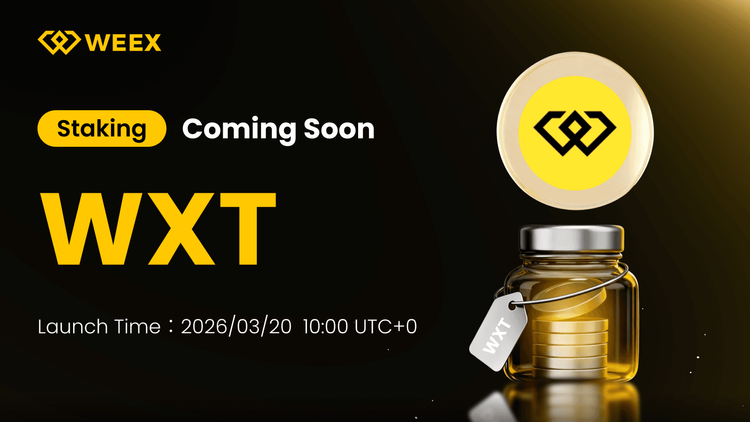
WEEX Launch WXT Staking: What You Need to Know
WXT staking refers to the process of locking your WXT holdings in a staking protocol to earn passive rewards. Unlike Proof-of-Stake networks where staking directly supports blockchain operations, platform-based staking like WEEX Staking allows users to earn yield on their assets through various mechanisms while maintaining flexibility.
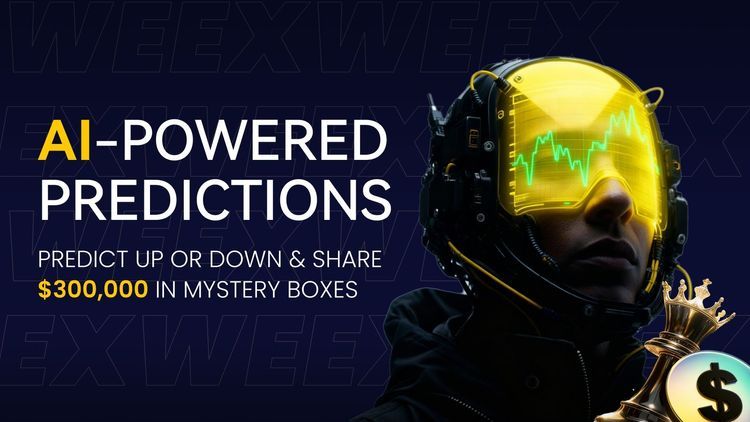
WEEX AI Predictions Event: Win 300,000 USDT with DOGE – Round 9 Now Live
join weex ao-powered predictions now!
Is World Rebuilding Trust (WRT) a Good Investment? 2026 Strategic Market Report
Is World Rebuilding Trust (WRT) a good investment in 2026? Read our 3,000-word deep dive into WRT tokenomics, the Solana RWA narrative, and price predictions. Discover the risks and rewards of tokenized reconstruction aid and learn why trading on WEEX provides the essential security for this high-volatility asset.

WEEX Futures Lists BMNRon USDT Perpetual Contract
Trade BitMine Immersion Technologies Tokenized Stock (BMNRon) on WEEX. The BMNR USDT perpetual contract launches Mar 19 with 24/7 access to US stock markets.

WEEX to List SanDisk (SNDK) and Launch SNDK USDT Perpetual Contract
Trade SanDisk (SNDK) Coin and SNDK USDT perpetuals on WEEX Exchange. Explore US stock futures with high leverage on the newly listed SanDisk (SNDK) pair.

WEEX to List MUon and Launch MUon USDT Perpetual Contract
WEEX lists Micron Technology Tokenized Stock (Ondo) (MUon). Trade MUon USDT perpetual contracts on WEEX Exchange with up to 24/7 market access and high liquidity.
ATLA Trading Competition: Earn Rewards with 0-Fee Trading on WEEX
Join the Atleta Network (ATLA) trading competition on WEEX to earn rewards. Discover how new users can claim free bonuses and benefit from zero-fee trading during this exclusive modular Layer 1 event.

NG USDT on WEEX Futures: Trade Natural Gas (NG) Coin
Trade Natural Gas (NG) Coin on WEEX Exchange. NG USDT perpetual contracts are now live on WEEX Futures. Access global energy markets 24/7 with the new NG listing.
Where and How to Buy SanDisk (SNDK) Crypto in 2026
SanDisk (SNDK), a tokenized derivative of the well-known storage technology company, has caught fresh attention in the crypto…
What is SanDisk (SNDK) Coin? Everything You Need to Know
SanDisk Corporation (Derivatives), identified by the token ticker SNDK, recently made its debut on the WEEX Exchange. As…
What is BitMine Immersion Technologies Tokenized Stock (Ondo) (BMNRon) Coin
BitMine Immersion Technologies Tokenized Stock (Ondo) (BMNRon) has recently garnered attention as it was newly listed on WEEX…
Is SanDisk (SNDK) Coin a Good Investment?
SanDisk (SNDK) has caught attention in the crypto space as a tokenized derivative of the traditional SanDisk Corporation…
Is BMNRon Coin a Good Investment in 2026?
BitMine Immersion Technologies Tokenized Stock (Ondo), known by its token symbol BMNRon, has been making waves in the…
Where and How to Buy BMNRon Coin: A Beginner’s Guide
BitMine Immersion Technologies Tokenized Stock (Ondo), known by its ticker BMNRon, has caught attention in the crypto space…


 App
App